IJNMSIJNMS
International Journal of Nursing and Midwifery Science (IJNMS)International Journal of Nursing and Midwifery Science (IJNMS)Breastfeeding Self-Efficacy (BSE) and milk production are two important components that directly influence breastfeeding success. Hypnopressure is considered capable of improving the psychological condition of mothers and stimulating the physiological mechanisms involved in the lactation process. This study aims to analyze the effect of hypnopressure on BSE and milk production in breastfeeding mothers. The study used a pre-experimental design with a one-group pretest–posttest approach. The sample consisted of 17 normal postpartum mothers selected through purposive sampling. BSE was measured using the Breastfeeding Self-Efficacy Scale–Short Form (BSES-SF), while milk production was measured using an electric pump. The hypnopressure intervention was given for seven days with a duration of 40 minutes per session. The data were analyzed using the Wilcoxon test. The results showed a significant increase in milk production, with the average volume increasing from 10.29 ml before the intervention to 58.18 ml after the intervention (p = 0.000). Similarly, the BSE score increased significantly from an average of 49.82 to 56.53 (p = 0.000). Hypnopressure plays a role in increasing relaxation, reducing anxiety, and strengthening hormonal responses through increased secretion of oxytocin and prolactin. This intervention is recommended as a non-pharmacological strategy that can be integrated into midwifery services to support breastfeeding success, especially for mothers with high stress levels or low milk production.
The study demonstrates that hypnopressure significantly impacts breastfeeding self-efficacy (BSE) and milk production in postpartum mothers.This intervention, combining hypnosis relaxation techniques and acupressure point stimulation, effectively stimulates the psycho-neuro-endocrine mechanisms involved in lactation by increasing oxytocin and prolactin secretion while reducing anxiety.Therefore, integrating hypnopressure into midwifery practice is a relevant strategy to support successful exclusive breastfeeding, particularly for mothers experiencing high anxiety, low milk production, or a lack of confidence.
Penelitian lebih lanjut perlu dilakukan untuk menguji efektivitas hypnopressure pada kelompok ibu postpartum dengan karakteristik yang lebih beragam, seperti usia, paritas, dan tingkat stres yang berbeda. Studi komparatif yang membandingkan hypnopressure dengan intervensi lain, seperti konseling laktasi atau terapi relaksasi, dapat memberikan bukti yang lebih kuat mengenai manfaat relatif dari masing-masing pendekatan. Selain itu, penelitian kualitatif yang mendalam dapat dilakukan untuk memahami pengalaman subjektif ibu dalam menerima hypnopressure dan bagaimana hal itu memengaruhi persepsi mereka tentang kemampuan menyusui serta hubungan mereka dengan bayi, sehingga dapat mengoptimalkan implementasi intervensi ini dalam praktik kebidanan dan meningkatkan dukungan terhadap keberhasilan menyusui secara keseluruhan.
- Journal | Universitas Nahdlatul Ulama Surabaya. journal universitas nahdlatul ulama surabaya quick jump... doi.org/10.33086/jhs.v9i1.178Journal Universitas Nahdlatul Ulama Surabaya journal universitas nahdlatul ulama surabaya quick jump doi 10 33086 jhs v9i1 178
- Faktor-Faktor yang Berhubungan dengan Pemberian ASI Ekslusif pada Ibu | Jurnal Obsesi : Jurnal Pendidikan... doi.org/10.31004/obsesi.v2i1.17Faktor Faktor yang Berhubungan dengan Pemberian ASI Ekslusif pada Ibu Jurnal Obsesi Jurnal Pendidikan doi 10 31004 obsesi v2i1 17
| File size | 435.08 KB |
| Pages | 10 |
| DMCA | Report |
Related /

IJNMSIJNMS 05, yang mengindikasikan adanya perbedaan signifikan antara tingkat nyeri sebelum dan setelah intervensi. Dengan demikian, terapi pijat kehamilan di titik05, yang mengindikasikan adanya perbedaan signifikan antara tingkat nyeri sebelum dan setelah intervensi. Dengan demikian, terapi pijat kehamilan di titik

IJNMSIJNMS Ibu yang bekerja memiliki waktu yang lebih sedikit bersama anak, yang dapat memengaruhi perkembangannya. Perlakuan yang diberikan oleh orang tua kepadaIbu yang bekerja memiliki waktu yang lebih sedikit bersama anak, yang dapat memengaruhi perkembangannya. Perlakuan yang diberikan oleh orang tua kepada
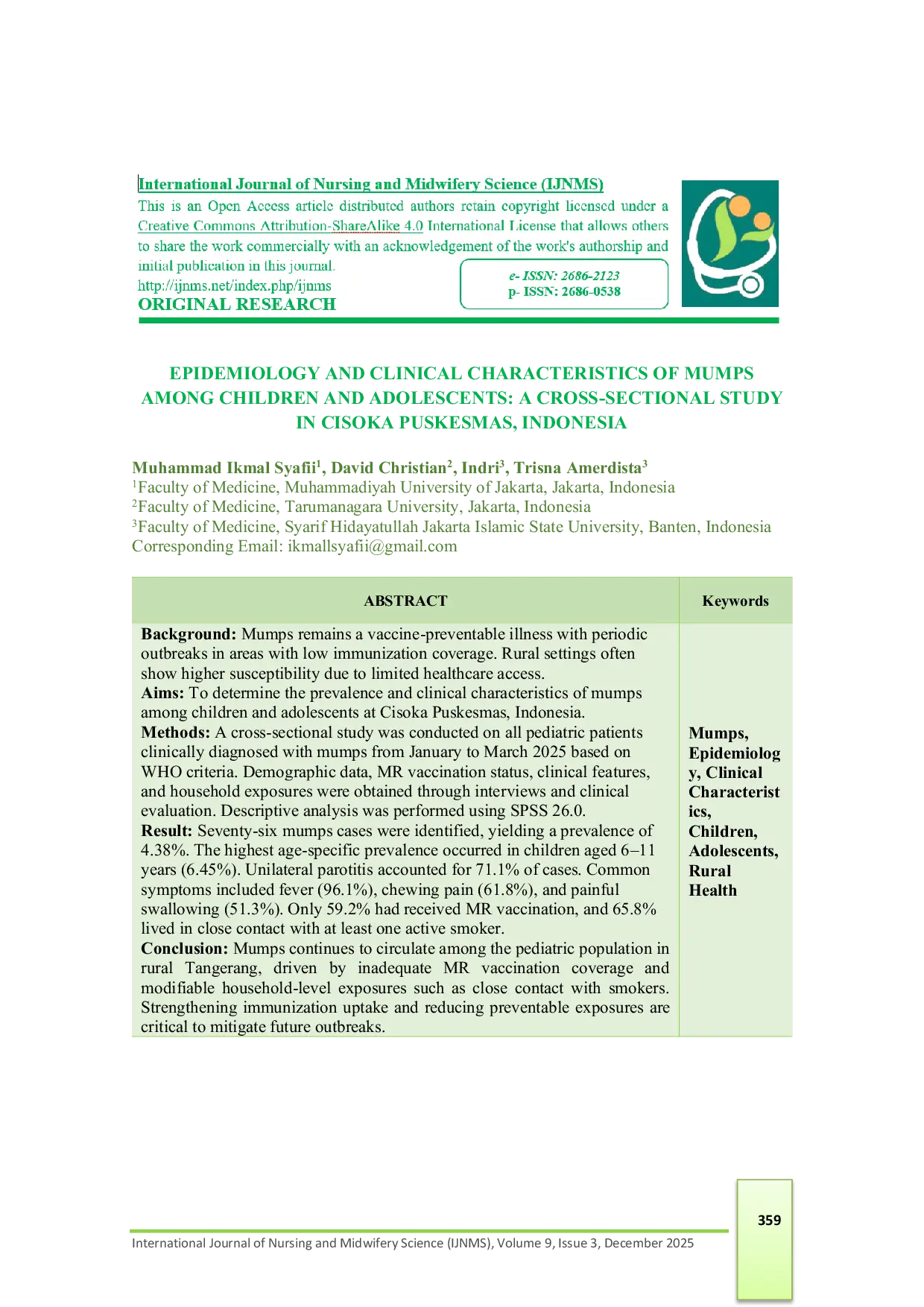
IJNMSIJNMS Metode yang digunakan adalah studi cross-sectional pada semua pasien anak yang secara klinis didiagnosis mumps dari Januari hingga Maret 2025 berdasarkanMetode yang digunakan adalah studi cross-sectional pada semua pasien anak yang secara klinis didiagnosis mumps dari Januari hingga Maret 2025 berdasarkan
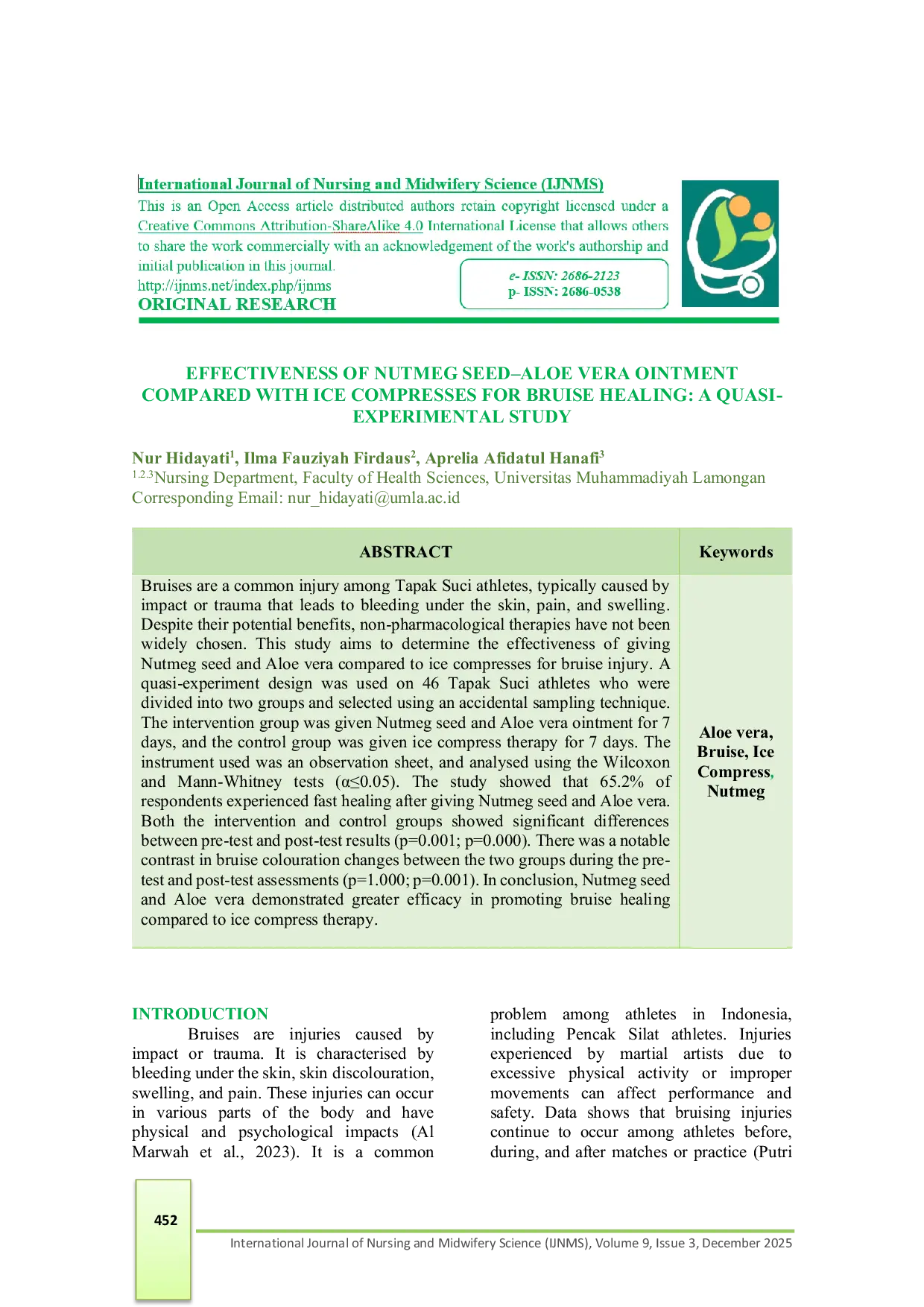
IJNMSIJNMS Kedua kelompok intervensi dan kontrol menunjukkan perbedaan yang signifikan antara hasil pre-test dan post-test (p=0,001; p=0,000). Ada perbedaan yangKedua kelompok intervensi dan kontrol menunjukkan perbedaan yang signifikan antara hasil pre-test dan post-test (p=0,001; p=0,000). Ada perbedaan yang
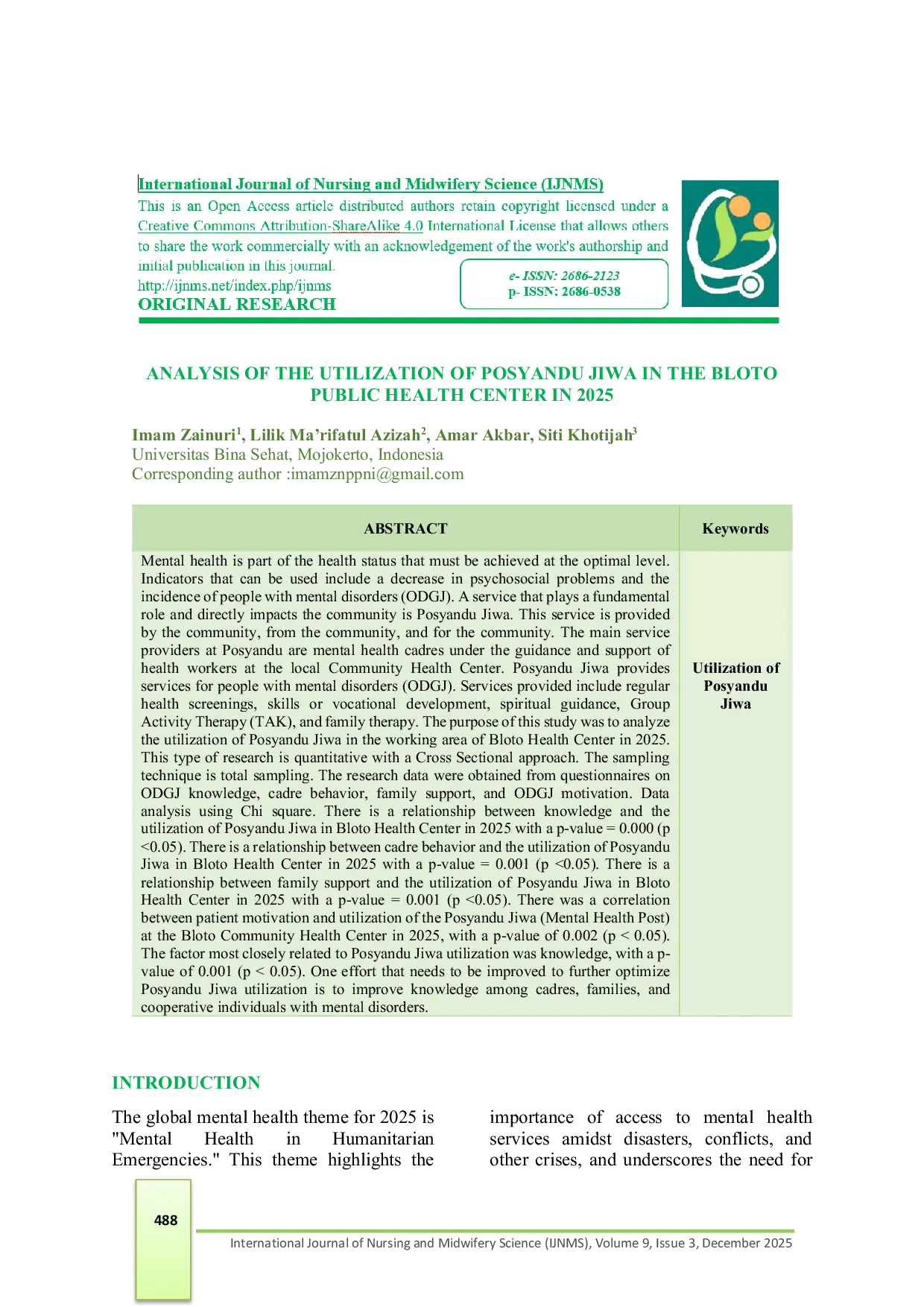
IJNMSIJNMS Terdapat hubungan antara perilaku kader dan penggunaan Posyandu Jiwa dengan p-value = 0,001 (p < 0,05). Terdapat hubungan antara dukungan keluarga danTerdapat hubungan antara perilaku kader dan penggunaan Posyandu Jiwa dengan p-value = 0,001 (p < 0,05). Terdapat hubungan antara dukungan keluarga dan
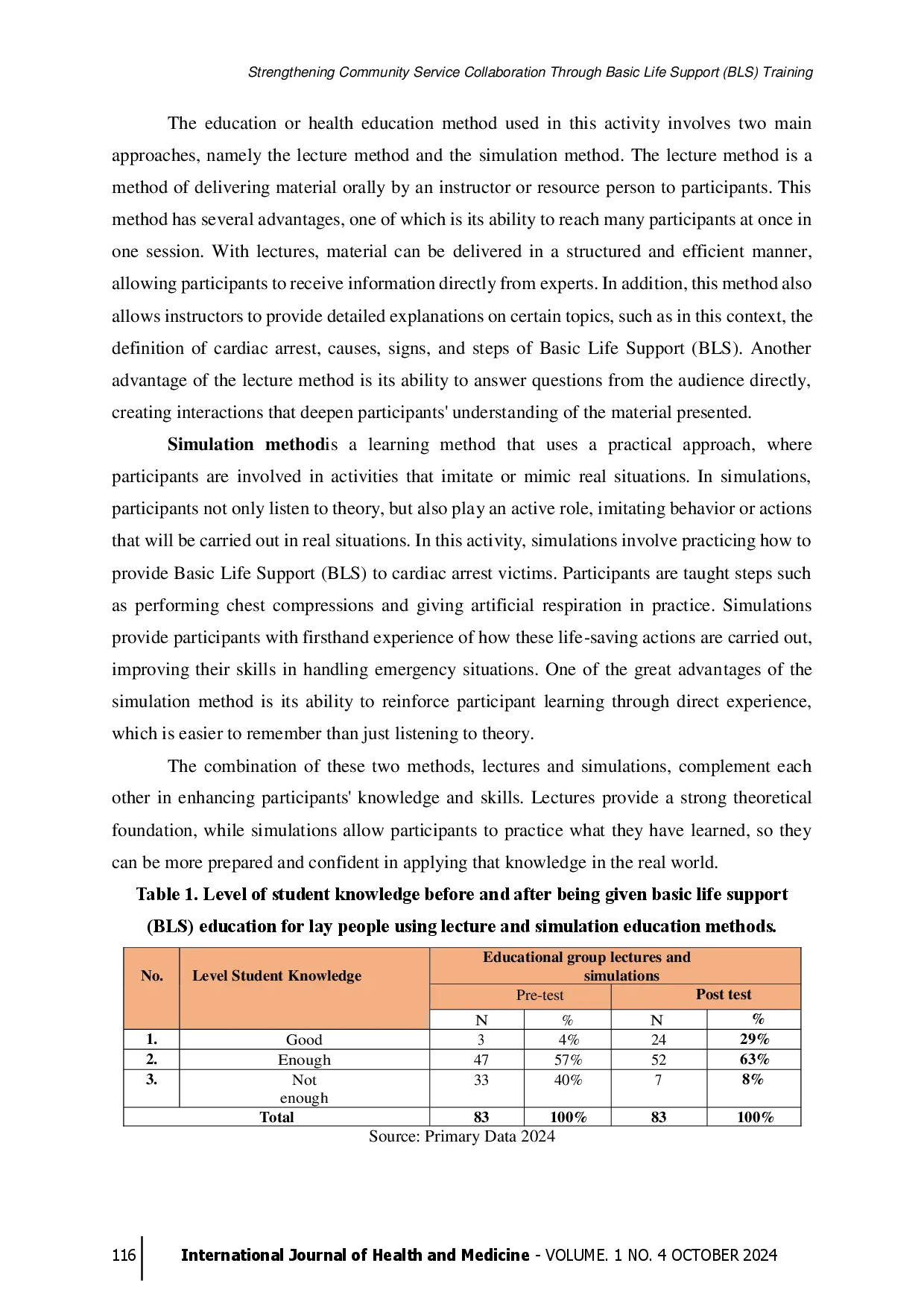
ARIKESIARIKESI Peningkatan pengetahuan tentang Dasar Dukungan Kehidupan di masyarakat akan menciptakan rasa kepedulian individu terhadap diri sendiri dan orang lain.Peningkatan pengetahuan tentang Dasar Dukungan Kehidupan di masyarakat akan menciptakan rasa kepedulian individu terhadap diri sendiri dan orang lain.

GOMITGOMIT 27), tetapi item C10 tidak sesuai model. Reliabilitas tinggi dicapai (Cronbachs alpha 0. 89), namun fungsi kategori dan targeting belum sepenuhnya memenuhi27), tetapi item C10 tidak sesuai model. Reliabilitas tinggi dicapai (Cronbachs alpha 0. 89), namun fungsi kategori dan targeting belum sepenuhnya memenuhi
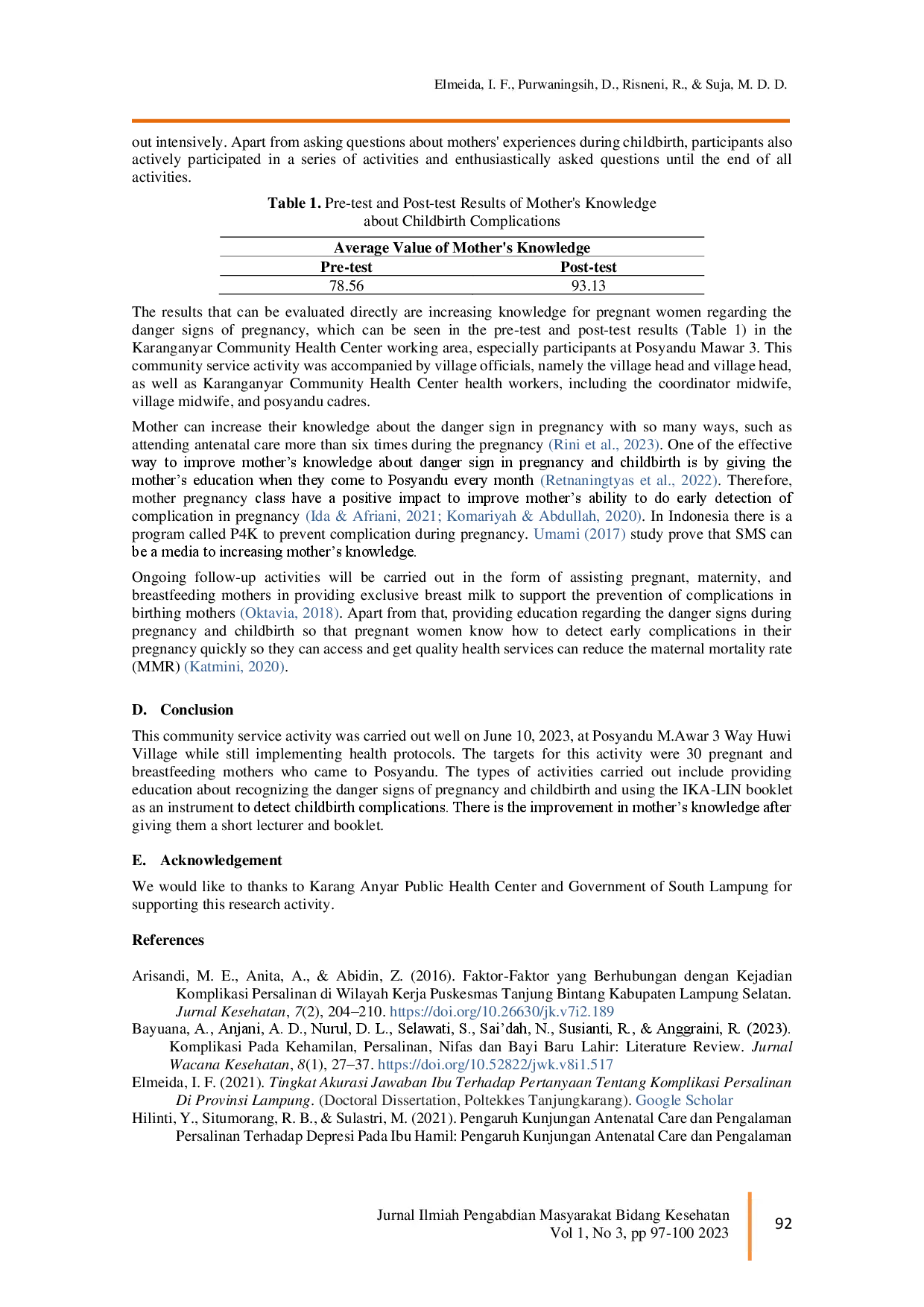
GOMITGOMIT Kegiatan pengabdian masyarakat ini berjalan dengan baik pada tanggal 10 Juni 2023, di Posyandu Mawar 3 Desa Way Huwi sambil tetap menerapkan protokol kesehatan.Kegiatan pengabdian masyarakat ini berjalan dengan baik pada tanggal 10 Juni 2023, di Posyandu Mawar 3 Desa Way Huwi sambil tetap menerapkan protokol kesehatan.
Useful /
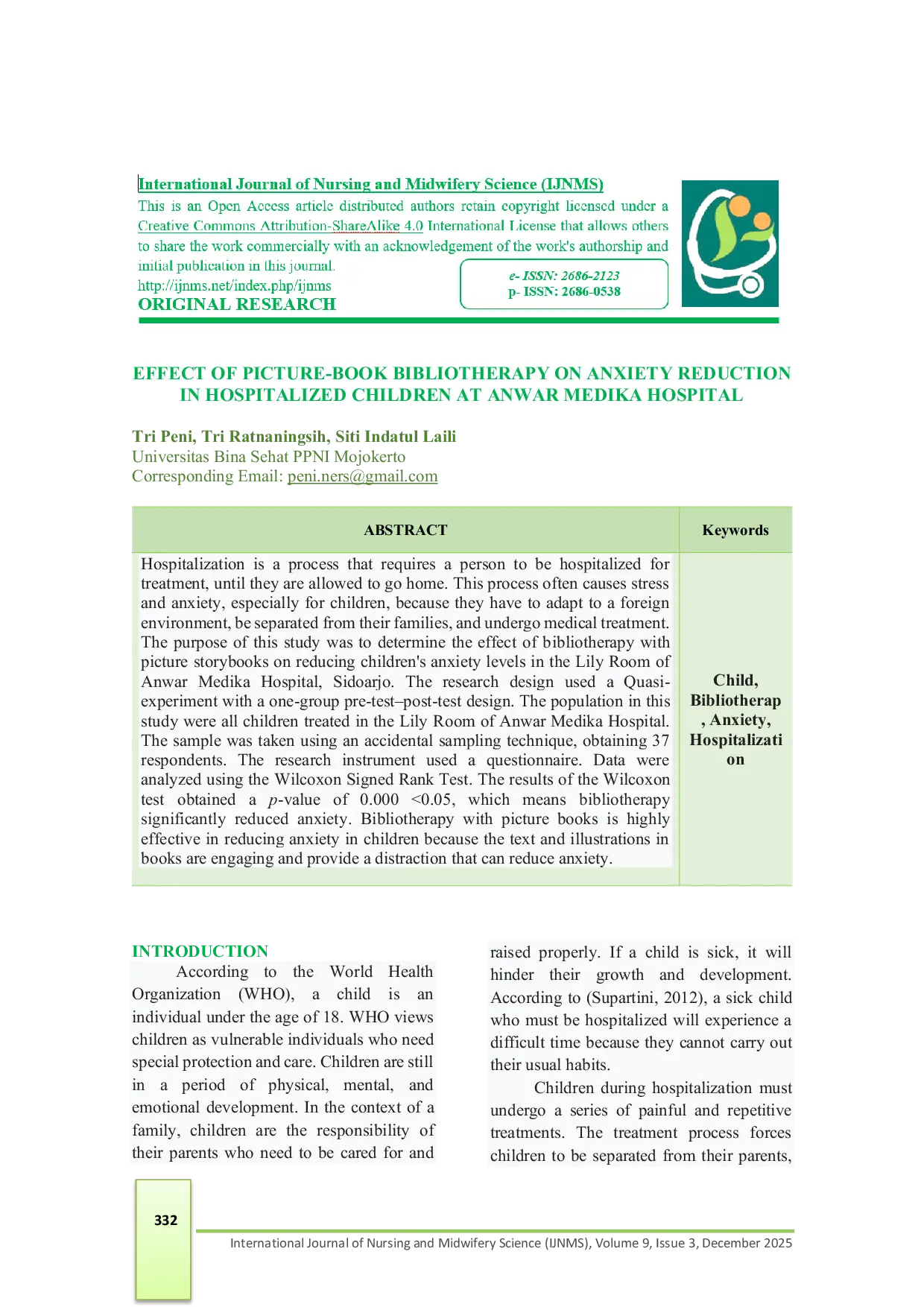
IJNMSIJNMS Sampel diambil menggunakan teknik sampling accidental, mendapatkan 37 responden. Alat penelitian menggunakan kuesioner. Data dianalisis menggunakan UjiSampel diambil menggunakan teknik sampling accidental, mendapatkan 37 responden. Alat penelitian menggunakan kuesioner. Data dianalisis menggunakan Uji
KEMENDAGRIKEMENDAGRI Ketidakhadiran otoritas pengelola warisan yang formal dan dominasi aspek fisik atas dimensi sosial-budaya menjadi hambatan untuk mencapai inklusivitasKetidakhadiran otoritas pengelola warisan yang formal dan dominasi aspek fisik atas dimensi sosial-budaya menjadi hambatan untuk mencapai inklusivitas

KEMENDAGRIKEMENDAGRI Pendekatan kualitatif juga mengungkap bahwa integrasi OSS dan inovasi daerah meningkatkan akses terhadap fasilitas investasi. Hasil tersebut menunjukkanPendekatan kualitatif juga mengungkap bahwa integrasi OSS dan inovasi daerah meningkatkan akses terhadap fasilitas investasi. Hasil tersebut menunjukkan
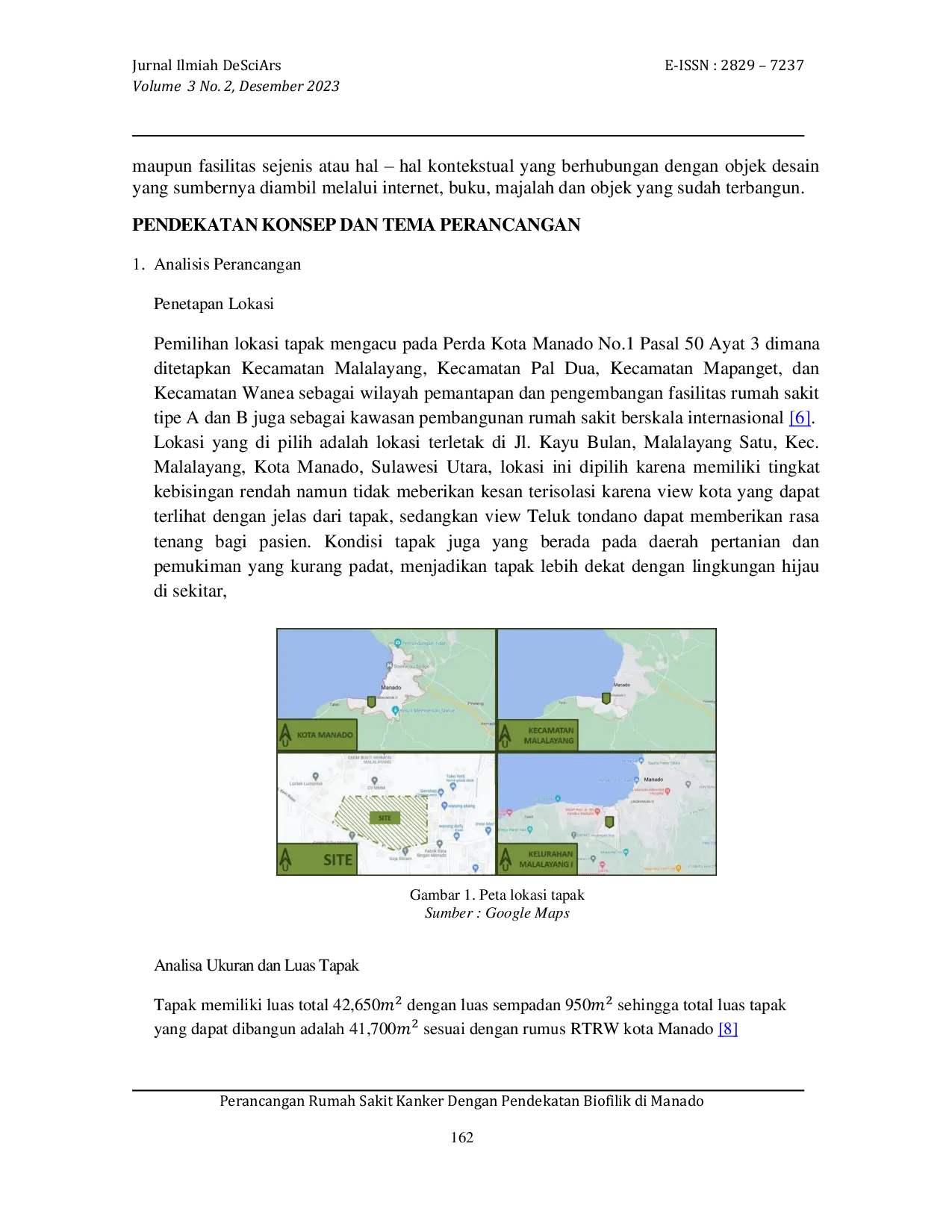
UNIMAUNIMA Perancangan Rumah Sakit Kanker dengan pendekatan Biofilik di Manado merupakan sebuah perancangan fasilitas kesehatan bertema biofilik dengan konsep “hutanPerancangan Rumah Sakit Kanker dengan pendekatan Biofilik di Manado merupakan sebuah perancangan fasilitas kesehatan bertema biofilik dengan konsep “hutan