MANDALANURSAMANDALANURSA
Business ManagementBusiness ManagementThe target for the development of New and Renewable Energy (NRE) in the National Energy General Plan continues to increase toward 2050. The limited availability of fossil energy resources and the growing environmental impacts of their use encourage the development of sustainable and environmentally friendly alternative energy sources that can also be integrated into learning activities. One potential renewable energy source that can be utilized in educational contexts is Solid Clumped Fuel (SCF). SCF is a solid fuel produced through the densification of biomass waste using a clumping method, resulting in a product with higher density, easier handling, and favorable combustion characteristics. This study aims to examine the potential of SCF as an environmentally friendly alternative energy source and as a learning medium for renewable energy education. The analysis focuses on the production process, physical characteristics, and energy properties of SCF. The raw materials used consist of biomass waste, namely rice husk and sawdust, which are processed through drying, grinding, mixing, compaction, and final drying stages. The parameters analyzed include moisture content, calorific value, and particle size analysis. The results indicate that SCF has a competitive calorific value compared to conventional solid fuels and produces relatively lower emissions. Therefore, SCF has strong potential as an environmentally friendly alternative energy source and as a contextual learning medium to enhance students understanding of renewable energy concepts and sustainable biomass waste utilization.
Based on the research conducted, the quality of the tested Solid Clumped Fuel (BBJP) products showed variations in their characteristics, with total moisture being a critical parameter influencing these characteristics.Controlling water content and size distribution are important factors in maintaining quality, transportation safety, and the suitability of BBJP product specifications to the needs of end users.Overall, the use of BBJP products is still suitable for trading and use according to the required specifications, with the need to control water content and fine fraction size to maintain quality and safety during shipping.
Penelitian lebih lanjut perlu dilakukan untuk mengoptimalkan pemanfaatan Solid Clumped Fuel (BBJP) sebagai sumber energi alternatif yang ramah lingkungan dan media pembelajaran yang efektif. Pertama, perlu dilakukan studi mendalam mengenai pencampuran batubara dengan BBJP untuk mengurangi emisi CO2, memanfaatkan limbah organik, dan meningkatkan efisiensi pembakaran. Kedua, penelitian tentang pengolahan batubara kalori menengah berbasis campuran biomassa BBJP dapat dilakukan untuk mengurangi kadar air, mengurangi debu, dan meningkatkan stabilitas pembakaran. Ketiga, studi tentang penerapan teknologi bersih seperti ESP dan FGD, serta penggunaan burner berkinerja tinggi, dapat memperkuat posisi co-firing BBJP-Batubara sebagai energi transisi dengan dampak lingkungan yang lebih terkontrol, sehingga mendukung transisi energi yang berkelanjutan dan mengurangi ketergantungan pada bahan bakar fosil.
| File size | 331 KB |
| Pages | 9 |
| DMCA | Report |
Related /
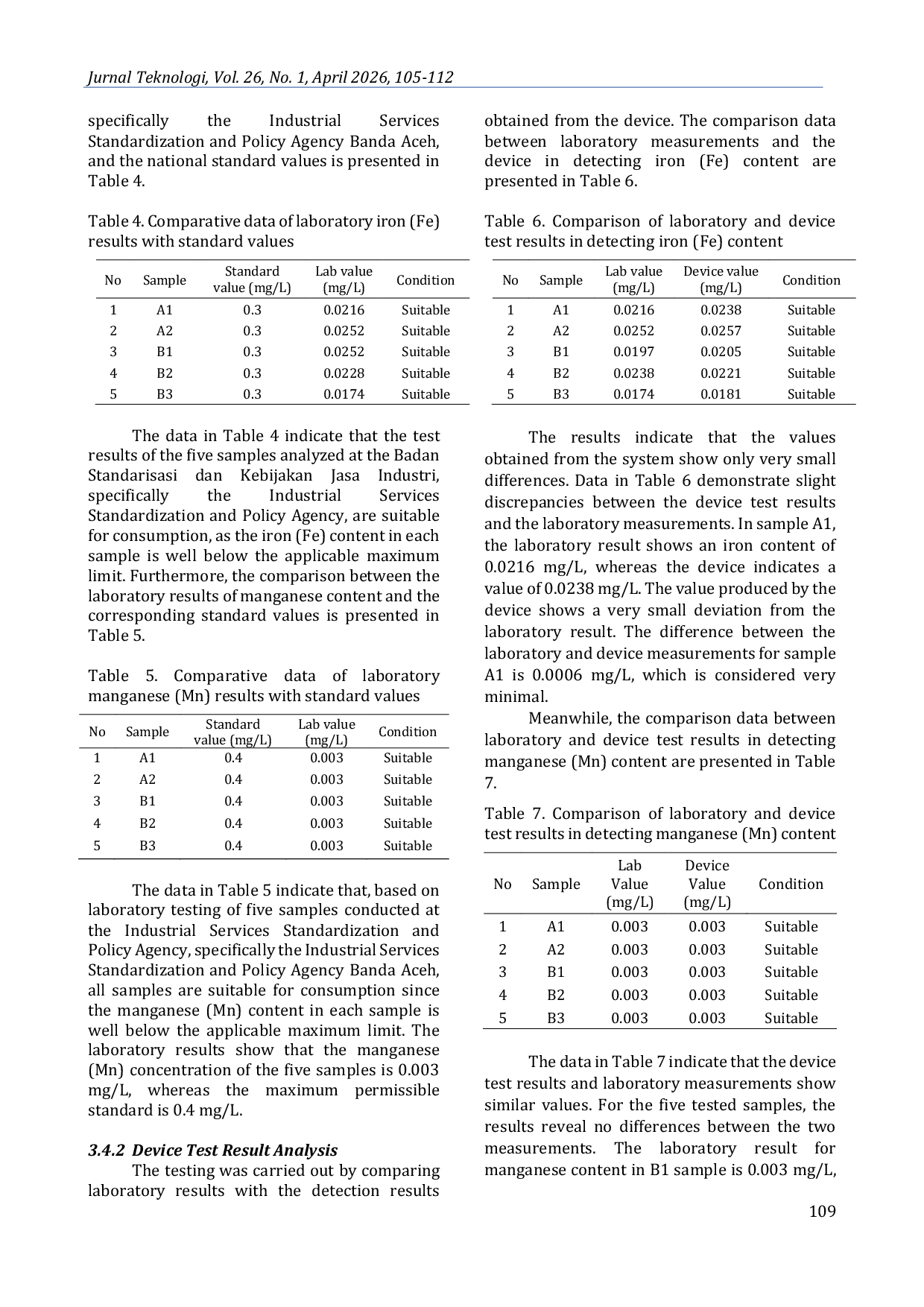
PNLPNL Kesalahan pengukuran rata-rata untuk Fe adalah 1,52%, sedangkan untuk Mn, kesalahan adalah 0%. Hasil ini menunjukkan bahwa perangkat yang dirancang berfungsiKesalahan pengukuran rata-rata untuk Fe adalah 1,52%, sedangkan untuk Mn, kesalahan adalah 0%. Hasil ini menunjukkan bahwa perangkat yang dirancang berfungsi
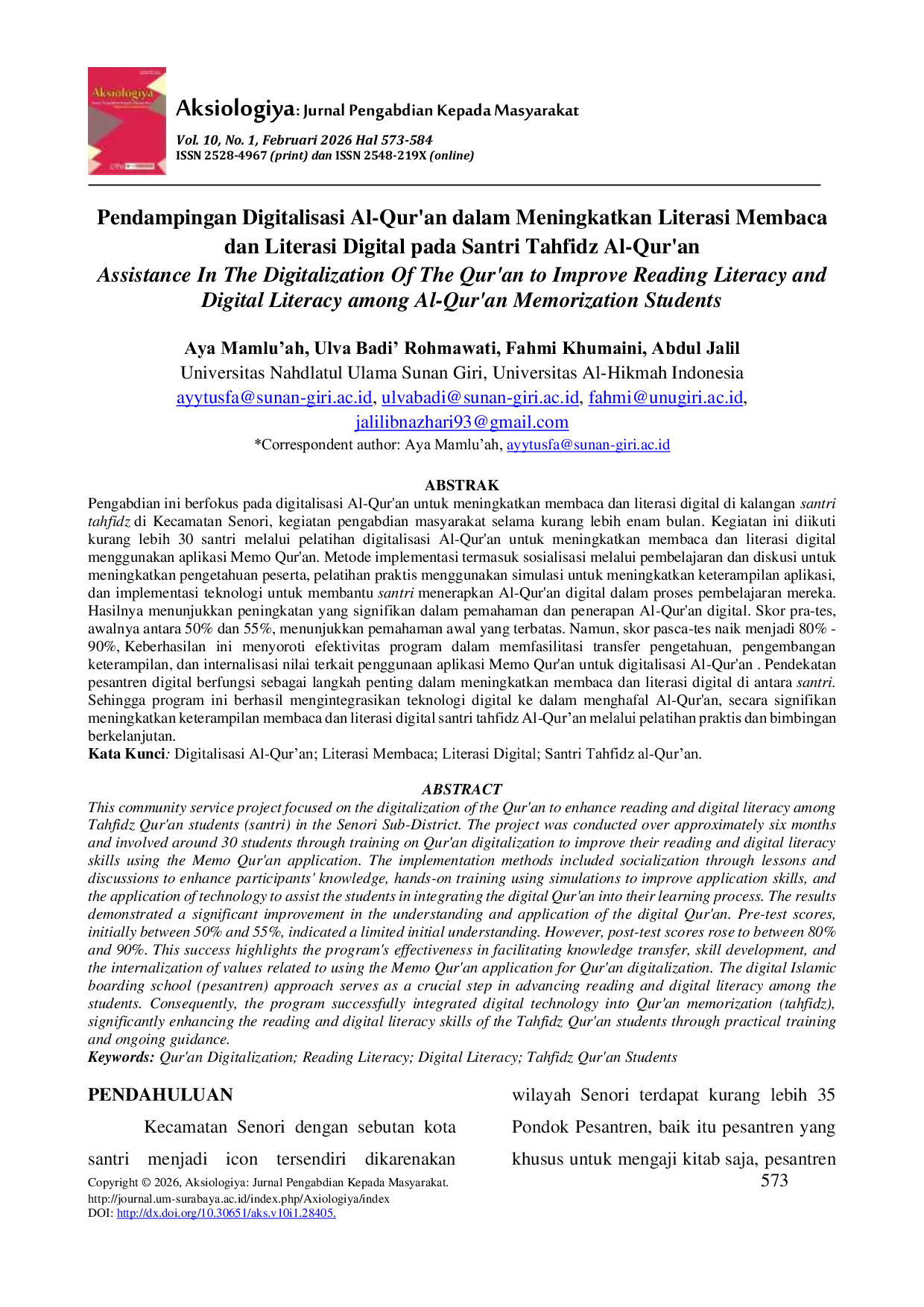
UM SURABAYAUM SURABAYA Skor pra-tes, awalnya antara 50% dan 55%, menunjukkan pemahaman awal yang terbatas. Namun, skor pasca-tes naik menjadi 80% - 90%. Keberhasilan ini menyorotiSkor pra-tes, awalnya antara 50% dan 55%, menunjukkan pemahaman awal yang terbatas. Namun, skor pasca-tes naik menjadi 80% - 90%. Keberhasilan ini menyoroti
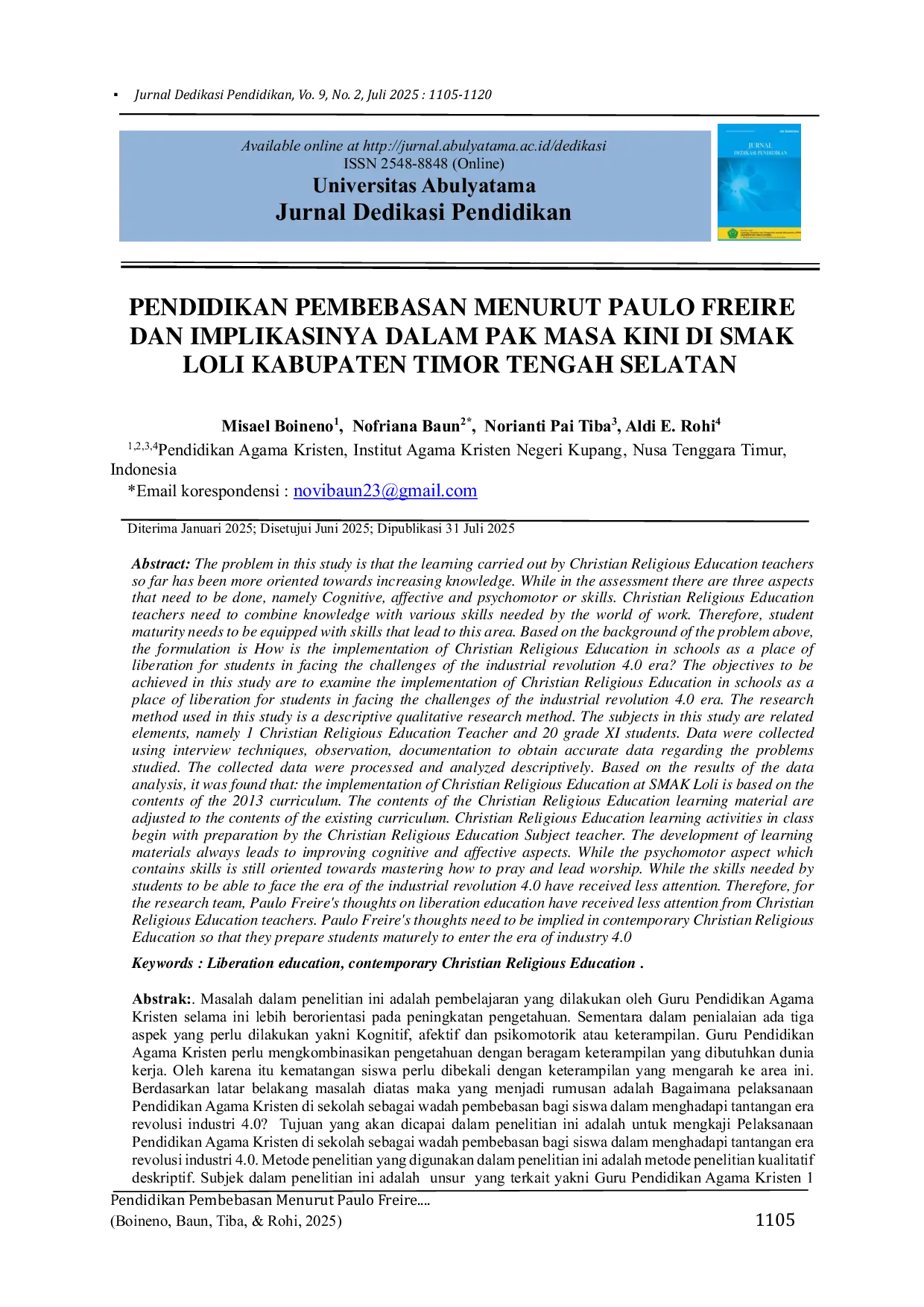
ABULYATAMAABULYATAMA Metode penelitian yang digunakan dalam penelitian ini adalah metode penelitian kualitatif deskriptif. Subjek dalam penelitian ini adalah unsur yang terkaitMetode penelitian yang digunakan dalam penelitian ini adalah metode penelitian kualitatif deskriptif. Subjek dalam penelitian ini adalah unsur yang terkait
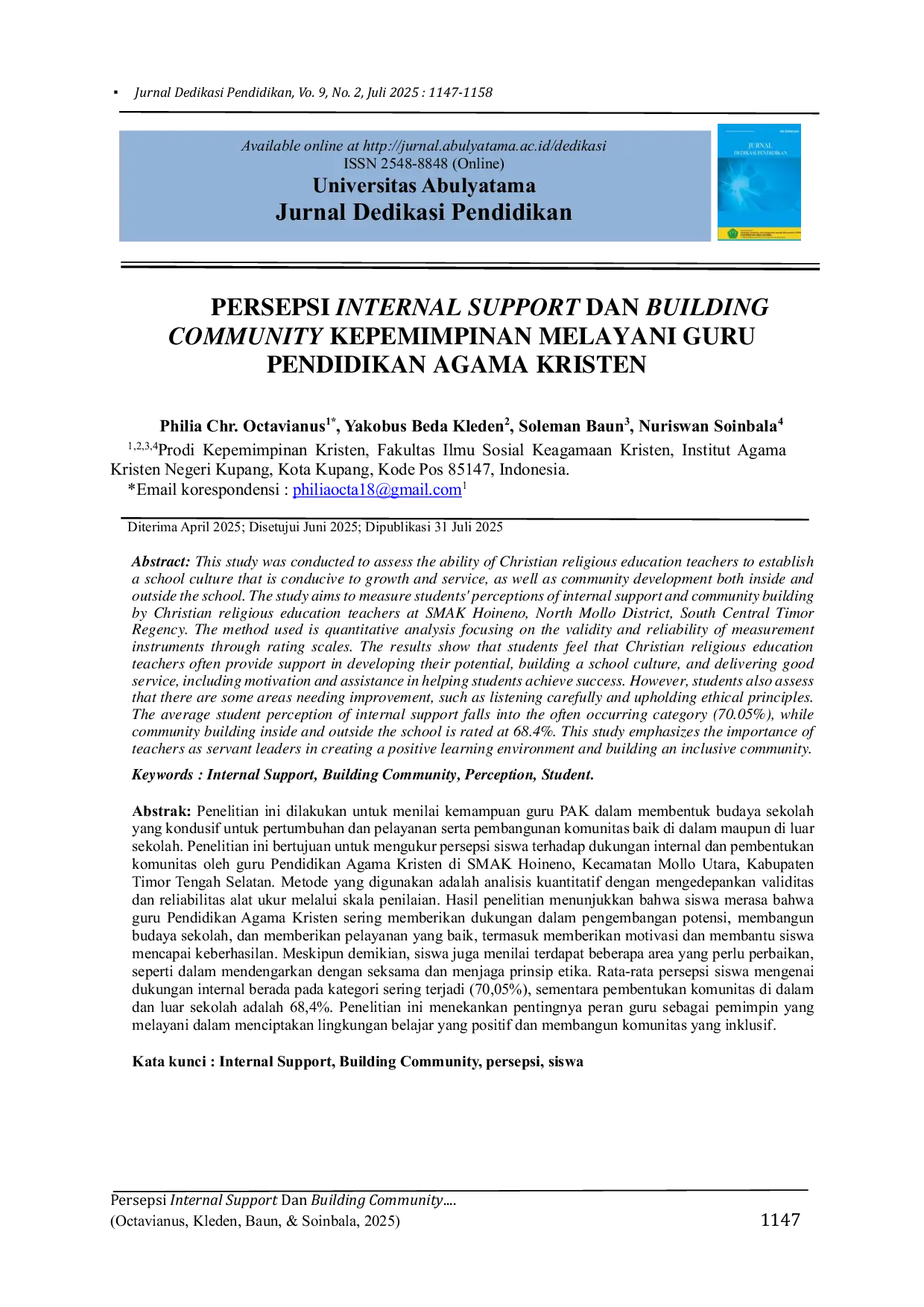
ABULYATAMAABULYATAMA Siswa juga menilai guru sering membangun komunitas di dalam dan luar sekolah dengan menghargai keragaman, memecahkan masalah secara kreatif, dan menghimbauSiswa juga menilai guru sering membangun komunitas di dalam dan luar sekolah dengan menghargai keragaman, memecahkan masalah secara kreatif, dan menghimbau
UPHUPH Seiring dengan hal tersebut, tim Dosen Universitas Telkom yang berkeahlian Digital Marketing dan Public Relations bersinergi untuk memberikan pelatihanSeiring dengan hal tersebut, tim Dosen Universitas Telkom yang berkeahlian Digital Marketing dan Public Relations bersinergi untuk memberikan pelatihan

PARAHITAPARAHITA Berdasarkan hasil evaluasi. Pemanfaatan limbah buah jeruk sebagai pupuk organik cair mampu disosialisasikan dengan baik kepada anggota kelompok tani tunasBerdasarkan hasil evaluasi. Pemanfaatan limbah buah jeruk sebagai pupuk organik cair mampu disosialisasikan dengan baik kepada anggota kelompok tani tunas

NUSAMANDIRINUSAMANDIRI Selain itu, program ini memberikan dampak positif terhadap kesiapan sekolah dalam menghadapi tantangan era digital. Program ini merupakan bagian dari HibahSelain itu, program ini memberikan dampak positif terhadap kesiapan sekolah dalam menghadapi tantangan era digital. Program ini merupakan bagian dari Hibah

UNSIKAUNSIKA Faktor lain yang mempengaruhi kadar etanol yang dihasilkan adalah lokasi pengambilan sampel terutama pada bahan organik rumput gajah dengan mengukur pHFaktor lain yang mempengaruhi kadar etanol yang dihasilkan adalah lokasi pengambilan sampel terutama pada bahan organik rumput gajah dengan mengukur pH
Useful /
ABULYATAMAABULYATAMA Penulis menggunakan penelitian kualitatif dengan metode phenomenology. Guna penelitian ini untuk mengetahui fenomena-fenomena yang nampak dan nyata denganPenulis menggunakan penelitian kualitatif dengan metode phenomenology. Guna penelitian ini untuk mengetahui fenomena-fenomena yang nampak dan nyata dengan

CATTLEYADFCATTLEYADF Lingkungan tertentu yang menunjukkan urgensi keamanan data adalah kafe internet (warnet). Kafe internet menyediakan akses publik ke internet, memungkinkanLingkungan tertentu yang menunjukkan urgensi keamanan data adalah kafe internet (warnet). Kafe internet menyediakan akses publik ke internet, memungkinkan

ABULYATAMAABULYATAMA Penelitian ini menunjukkan bahwa siswa SMA 1 Kuta Baro mengalami kecemasan berbicara bahasa Inggris yang signifikan disebabkan oleh kesulitan pengucapan,Penelitian ini menunjukkan bahwa siswa SMA 1 Kuta Baro mengalami kecemasan berbicara bahasa Inggris yang signifikan disebabkan oleh kesulitan pengucapan,
ABULYATAMAABULYATAMA Tarian Ranup Lampuan yang merupakan bagian dari budaya Aceh, dipilih karena gerakan-gerakannya yang anggun dan terstruktur dapat menggambarkan berbagaiTarian Ranup Lampuan yang merupakan bagian dari budaya Aceh, dipilih karena gerakan-gerakannya yang anggun dan terstruktur dapat menggambarkan berbagai