ANTISPUBLISHERANTISPUBLISHER
Journal of Artificial Intelligence and Digital EconomyJournal of Artificial Intelligence and Digital EconomyFlexible robots pose a great challenge when partial manipulation is to be performed under unstructured environments. This paper deals with the issue of specific endpoint control and vibration cancellation of a multi-degree-of-freedom (DOF) tendon-driven flexible arm. The main shortcoming of standard controllers like PID is that they cannot respond to the nonlinearities, time-varying dynamics, and external disturbances inherent in the system. The methodology consists of detailed mechanical design through CAD/FEA, kinematic and dynamic modulization through a piecewise constant curvature approximation and synthesis of an online adaptive fuzzy inference system. The proposed system is tested with the help of simulation and physical testing. The major findings show that the trajectory tracking error (RMSE) decreased by 55.6 %, the amplitude of vibrations reduced by 70 % and the grasping success rates increased significantly, 40 % (PID) to 75 % (AFLC) with a fine stress ball. The settling time and the overshoot are also reduced by 45.2% and 61.6% respectively to the baseline PID controller by the AFLC.
The suggested Adaptive Fuzzy Logic Control (AFLC) strategy is effective in managing the nonlinearities of the system and its time-dependent parameters, performing much better than a standard PID controller both in simulation and real-world grasping tasks.Its adaptive nonlinear mapping ability is its secret of high performance.The AFLC is also able to change its behavior dynamically in response to the nonlinearities and time-varying parameters.The resultant performances are evidence-based that the consolidated AFLC strategy is indeed effective in solving the main issues of operating a multi-DOF flexible arm.Future work is suggested to incorporate computer vision for autonomous object detection and grasp pose estimation, investigate deep reinforcement learning for controller adaptation, and miniaturize the design for broader applications.
Berdasarkan penelitian ini, beberapa saran penelitian lanjutan dapat diajukan. Pertama, integrasi sistem visi komputer dapat memungkinkan robot untuk secara otomatis mendeteksi objek dan menentukan pose cengkeraman yang optimal, sehingga meningkatkan otonomi dan fleksibilitas sistem. Kedua, eksplorasi metode pembelajaran penguatan mendalam dapat mengoptimalkan adaptasi parameter pengontrol fuzzy secara real-time, memungkinkan robot untuk beradaptasi dengan perubahan lingkungan dan tugas yang kompleks. Ketiga, miniaturisasi desain robot dan pengembangan aktuator berkinerja tinggi dapat memperluas aplikasi sistem ke bidang-bidang seperti robotika medis dan eksplorasi ruang angkasa, membuka peluang baru untuk inovasi dan pemecahan masalah.
| File size | 648.74 KB |
| Pages | 16 |
| DMCA | Report |
Related /
CEREDINDONESIACEREDINDONESIA Penelitian ini diharapkan dapat berkontribusi dalam meningkatkan pengelolaan dana pendidikan di Indonesia melalui penerapan prinsip transparansi dan akuntabilitas.Penelitian ini diharapkan dapat berkontribusi dalam meningkatkan pengelolaan dana pendidikan di Indonesia melalui penerapan prinsip transparansi dan akuntabilitas.

CEREDINDONESIACEREDINDONESIA Hasil menunjukkan bahwa literasi keuangan memiliki efek total positif terhadap kinerja keuangan (β = 0,595). Literasi keuangan meningkatkan secara signifikanHasil menunjukkan bahwa literasi keuangan memiliki efek total positif terhadap kinerja keuangan (β = 0,595). Literasi keuangan meningkatkan secara signifikan
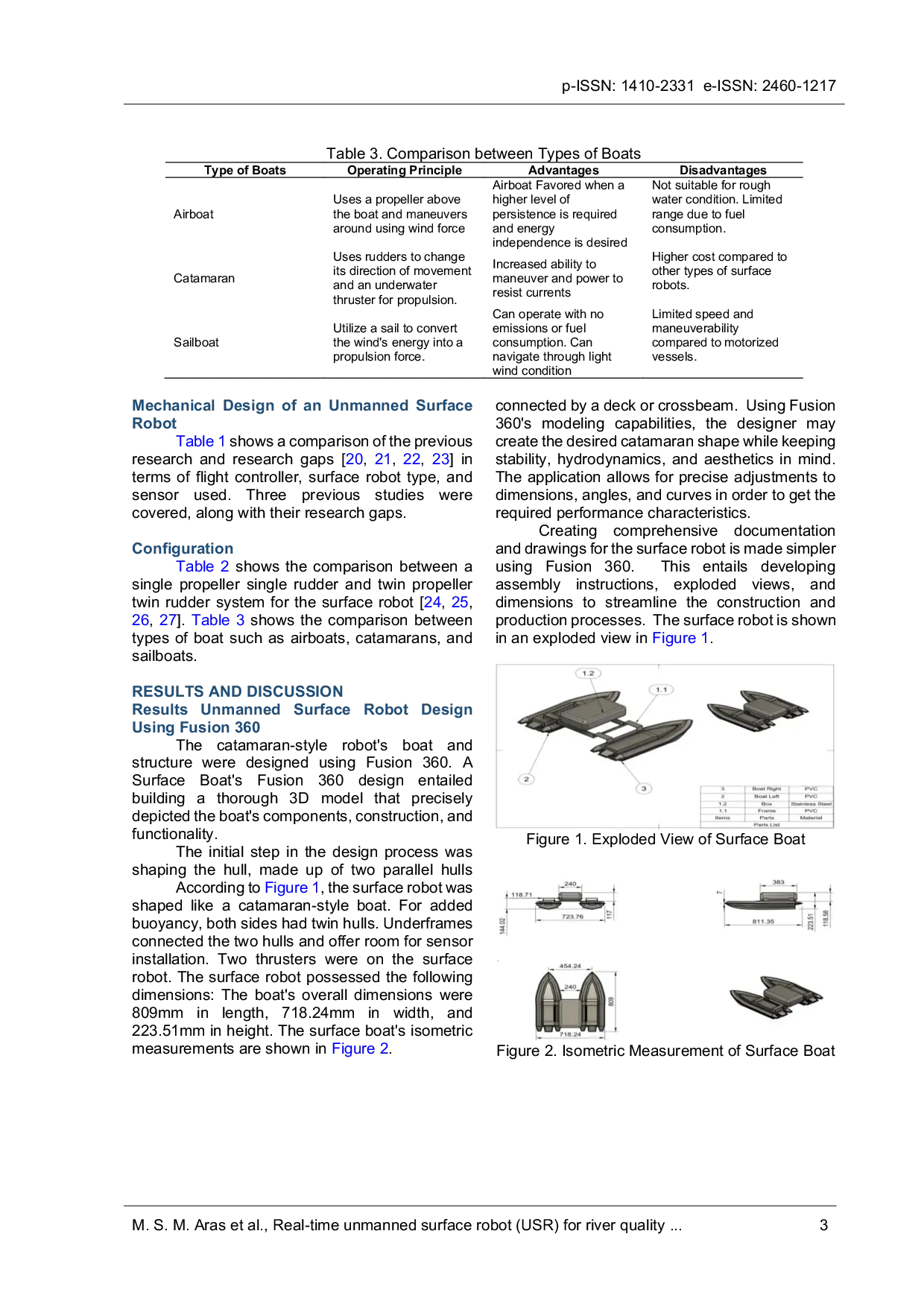
UMBUMB USR dapat melintasi sungai, mengumpulkan data pada titik‑titik tertentu atau lokasi yang ditentukan, serta terus menerus memantau bagian tertentu sungaiUSR dapat melintasi sungai, mengumpulkan data pada titik‑titik tertentu atau lokasi yang ditentukan, serta terus menerus memantau bagian tertentu sungai

CEREDINDONESIACEREDINDONESIA Penelitian ini menggunakan pendekatan yuridis normatif, dilakukan untuk mengetahui sejarah regulasi mengenai PHK karena alasan mendesak mulai dari yangPenelitian ini menggunakan pendekatan yuridis normatif, dilakukan untuk mengetahui sejarah regulasi mengenai PHK karena alasan mendesak mulai dari yang

CEREDINDONESIACEREDINDONESIA Penggunaan fintech memiliki pengaruh positif dan signifikan terhadap perilaku menabung. Selain itu, fintech berperan sebagai mediator dalam hubungan antaraPenggunaan fintech memiliki pengaruh positif dan signifikan terhadap perilaku menabung. Selain itu, fintech berperan sebagai mediator dalam hubungan antara

CEREDINDONESIACEREDINDONESIA Oleh karena itu, sekiranya terdakwa yang telah dijatuhi hukuman tetap harus menyadari bahwa putusan pengadilan berfungsi untuk meningkatkan kesadaran danOleh karena itu, sekiranya terdakwa yang telah dijatuhi hukuman tetap harus menyadari bahwa putusan pengadilan berfungsi untuk meningkatkan kesadaran dan
CEREDINDONESIACEREDINDONESIA Stabilitas SDM ini merupakan prasyarat fundamental yang memungkinkan peningkatan produktivitas operasional dan, pada akhirnya, memperkuat kinerja dan ketahananStabilitas SDM ini merupakan prasyarat fundamental yang memungkinkan peningkatan produktivitas operasional dan, pada akhirnya, memperkuat kinerja dan ketahanan

CEREDINDONESIACEREDINDONESIA However, in practice, law enforcement still faces various problems, especially low public legal awareness and weak trust in law enforcement officials.However, in practice, law enforcement still faces various problems, especially low public legal awareness and weak trust in law enforcement officials.
Useful /

IAIN CURUPIAIN CURUP Temuan mengungkapkan tiga pergeseran utama: (1) urf digital merangka ulang peran pernikahan dari hierarkis-patriarkal menjadi berbasis kemitraan, (2) otoritasTemuan mengungkapkan tiga pergeseran utama: (1) urf digital merangka ulang peran pernikahan dari hierarkis-patriarkal menjadi berbasis kemitraan, (2) otoritas

UMBUMB Di antara model-model tersebut, ANN mencapai akurasi klasifikasi tertinggi (94,44%) dibandingkan dengan SVM (88,89%) dan KNN (77,78%). Hasil ini menunjukkanDi antara model-model tersebut, ANN mencapai akurasi klasifikasi tertinggi (94,44%) dibandingkan dengan SVM (88,89%) dan KNN (77,78%). Hasil ini menunjukkan
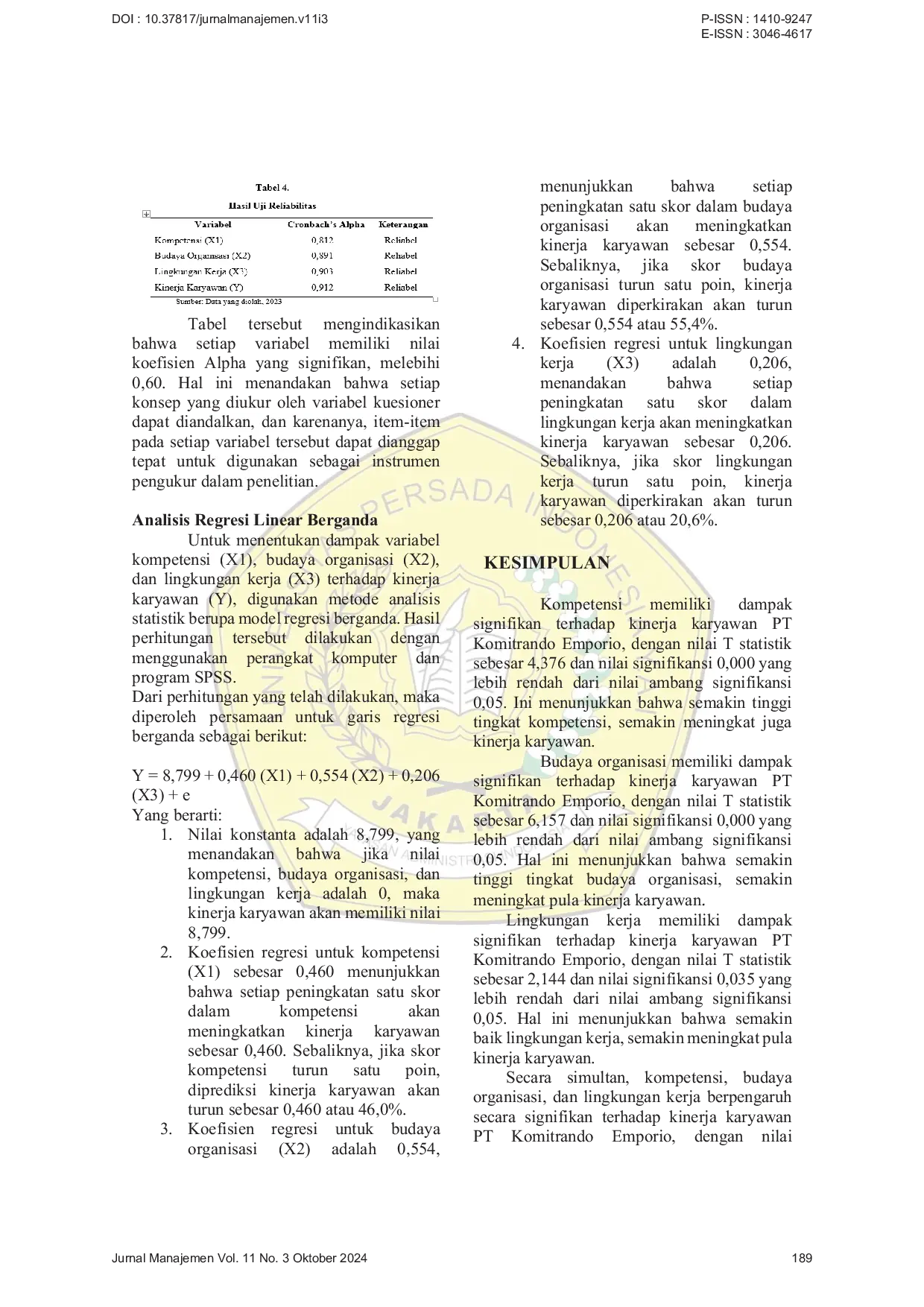
UPI YAIUPI YAI Menggunakan metode kuantitatif deskriptif, data dikumpulkan dari 98 responden melalui kuesioner yang telah diuji validitas dan reliabilitasnya. Hasil analisisMenggunakan metode kuantitatif deskriptif, data dikumpulkan dari 98 responden melalui kuesioner yang telah diuji validitas dan reliabilitasnya. Hasil analisis
POLTEKKES SMGPOLTEKKES SMG Metode: Rancangan penelitian ini adalah metode deskriptif dengan jenis studi kasus. Tujuan untuk menggambarkan implementasi beberapa tindakan manajemenMetode: Rancangan penelitian ini adalah metode deskriptif dengan jenis studi kasus. Tujuan untuk menggambarkan implementasi beberapa tindakan manajemen