JRTPPIJRTPPI
Jurnal Riset Teknologi Pencegahan Pencemaran IndustriJurnal Riset Teknologi Pencegahan Pencemaran IndustriRiau Province has great potential in ecotourism development, especially in coastal areas, mangrove forests, and tropical peatlands. However, this development is faced with serious challenges in the form of environmental pollution that threatens the sustainability of natural tourism destinations. This study aims to identify the forms of pollution that occur in Riaus ecotourism areas, analyze their impacts on ecosystems and tourism activities, and formulate strategic solutions for sustainable management. The method used is a qualitative approach with case studies in several leading ecotourism locations such as Mangrove Ecotourism in Bengkalis and Zamrud Lake tourism in Siak. Data were collected through interviews, observations, and field documentation. The findings of this study clearly demonstrate that environmental pollution—particularly from domestic waste, peatland fires, and land-use changes—poses a significant threat to the ecological integrity and long-term viability of ecotourism destinations in Riau Province. Without immediate and coordinated intervention, these threats risk undermining the regions ecotourism potential. Therefore, this study concludes that sustainable ecotourism in Riau can only be achieved through an integrative and participatory management model that involves capacity building for local communities, strict enforcement of environmental regulations, and multi-stakeholder collaboration. Such strategic efforts are essential to preserve the natural assets of Riau and ensure that ecotourism continues to provide ecological, social, and economic benefits in the future.
Environmental pollution poses a significant threat to the sustainability of ecotourism in Riau Province, manifesting in forms such as waste accumulation, peatland fires, and land conversion.This pollution negatively impacts both the ecological integrity of the region and the economic livelihoods of communities dependent on tourism.Achieving sustainable ecotourism in Riau necessitates an integrative and participatory management model, emphasizing community empowerment, stringent environmental regulations, and collaborative efforts among stakeholders.
Further research should investigate the effectiveness of various community-based conservation models in mitigating pollution and promoting sustainable tourism practices in Riau Province. Additionally, studies are needed to assess the economic valuation of ecosystem services provided by Riaus ecotourism destinations, to better inform policy decisions and incentivize conservation efforts. Finally, research should explore the potential of integrating traditional ecological knowledge with modern scientific approaches to develop more effective and culturally appropriate environmental management strategies, focusing on long-term monitoring and adaptive management practices to address the dynamic challenges of environmental change and tourism development in the region. These investigations should involve close collaboration with local communities, government agencies, and tourism operators to ensure relevance and practical applicability, ultimately contributing to the preservation of Riaus natural heritage and the sustainable development of its ecotourism sector.
| File size | 455.32 KB |
| Pages | 8 |
| DMCA | Report |
Related /
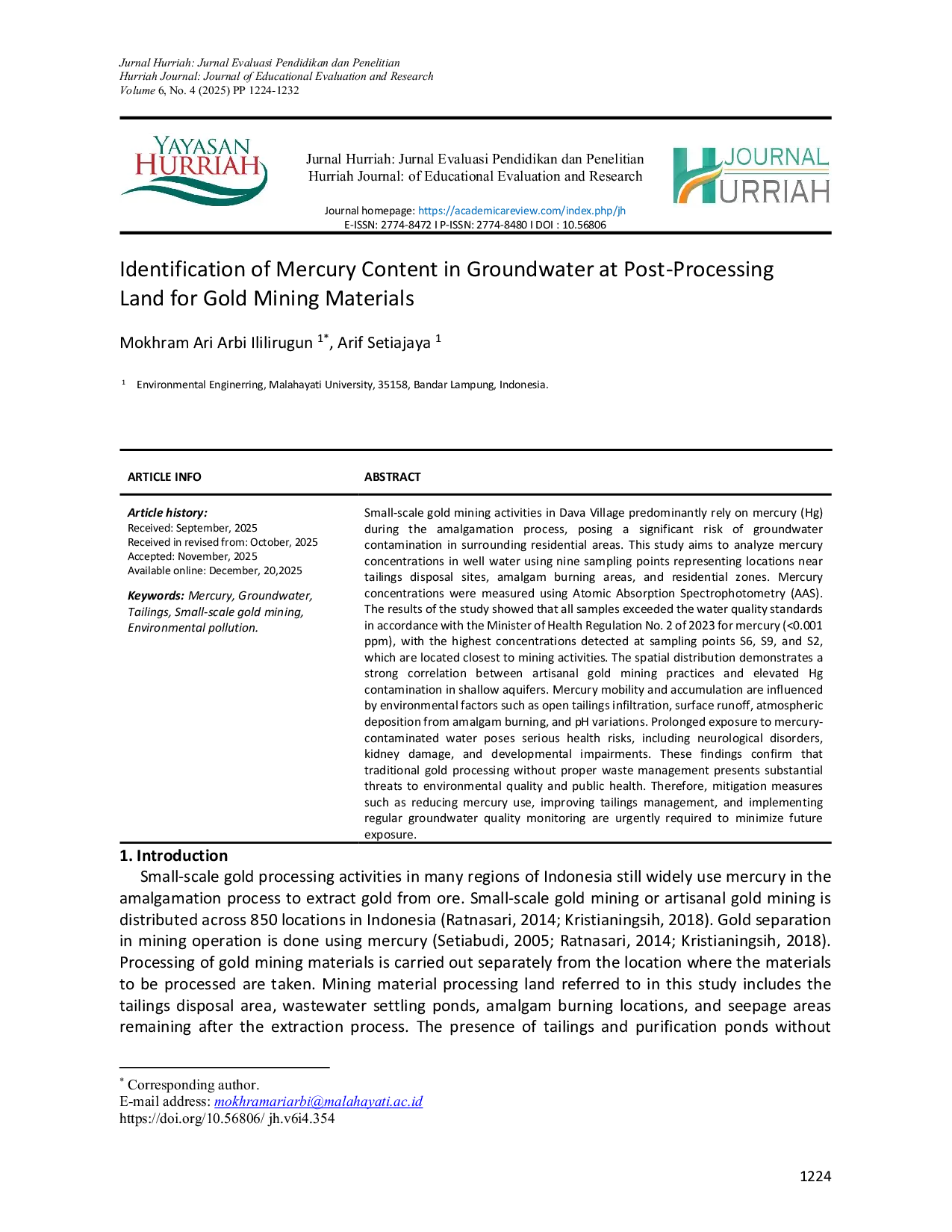
ACADEMICAREVIEWACADEMICAREVIEW Mercury concentrations were measured using Atomic Absorption Spectrophotometry (AAS). The results of the study showed that all samples exceeded the waterMercury concentrations were measured using Atomic Absorption Spectrophotometry (AAS). The results of the study showed that all samples exceeded the water

APPISIAPPISI Upaya BUMDes telah meningkatkan kunjungan, namun pengembangan fasilitas dan promosi lebih lanjut diperlukan. Penelitian ini menekankan pentingnya promosiUpaya BUMDes telah meningkatkan kunjungan, namun pengembangan fasilitas dan promosi lebih lanjut diperlukan. Penelitian ini menekankan pentingnya promosi

UNIGOUNIGO Sebagai basis ekonomi lokal untuk mendukung ekonomi desa, tambak ikan bandeng membutuhkan dukungan penuh dari pemerintah daerah dalam hal permodalan danSebagai basis ekonomi lokal untuk mendukung ekonomi desa, tambak ikan bandeng membutuhkan dukungan penuh dari pemerintah daerah dalam hal permodalan dan

IRSCIRSC Yuasafood Berkah Makmur memiliki dampak nyata dan signifikan terhadap nilai penjualan produk buah carica. Data statistik laporan tahunan tahun 2007 hinggaYuasafood Berkah Makmur memiliki dampak nyata dan signifikan terhadap nilai penjualan produk buah carica. Data statistik laporan tahunan tahun 2007 hingga
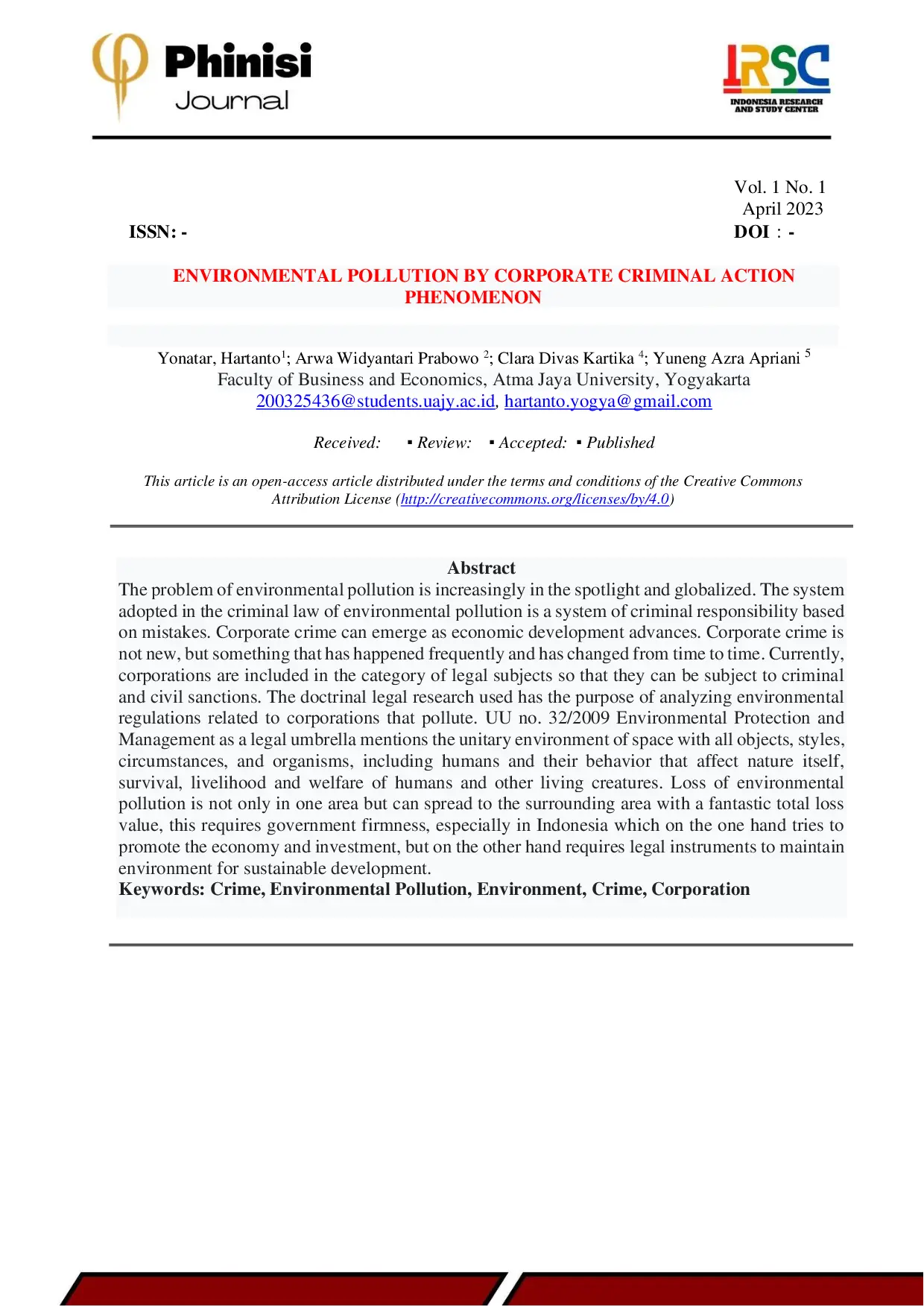
IRSCIRSC Lingkungan adalah sumber kehidupan manusia, dan pencemaran akan merusak kesehatan dan kualitas hidup. Perusahaan harus taat pada regulasi pengelolaan lingkunganLingkungan adalah sumber kehidupan manusia, dan pencemaran akan merusak kesehatan dan kualitas hidup. Perusahaan harus taat pada regulasi pengelolaan lingkungan

IRSCIRSC Purchasing decision adalah proses yang dimulai dari sebelum keputusan diambil hingga setelah keputusan pembelian telah dibuat. Keputusan untuk membeliPurchasing decision adalah proses yang dimulai dari sebelum keputusan diambil hingga setelah keputusan pembelian telah dibuat. Keputusan untuk membeli
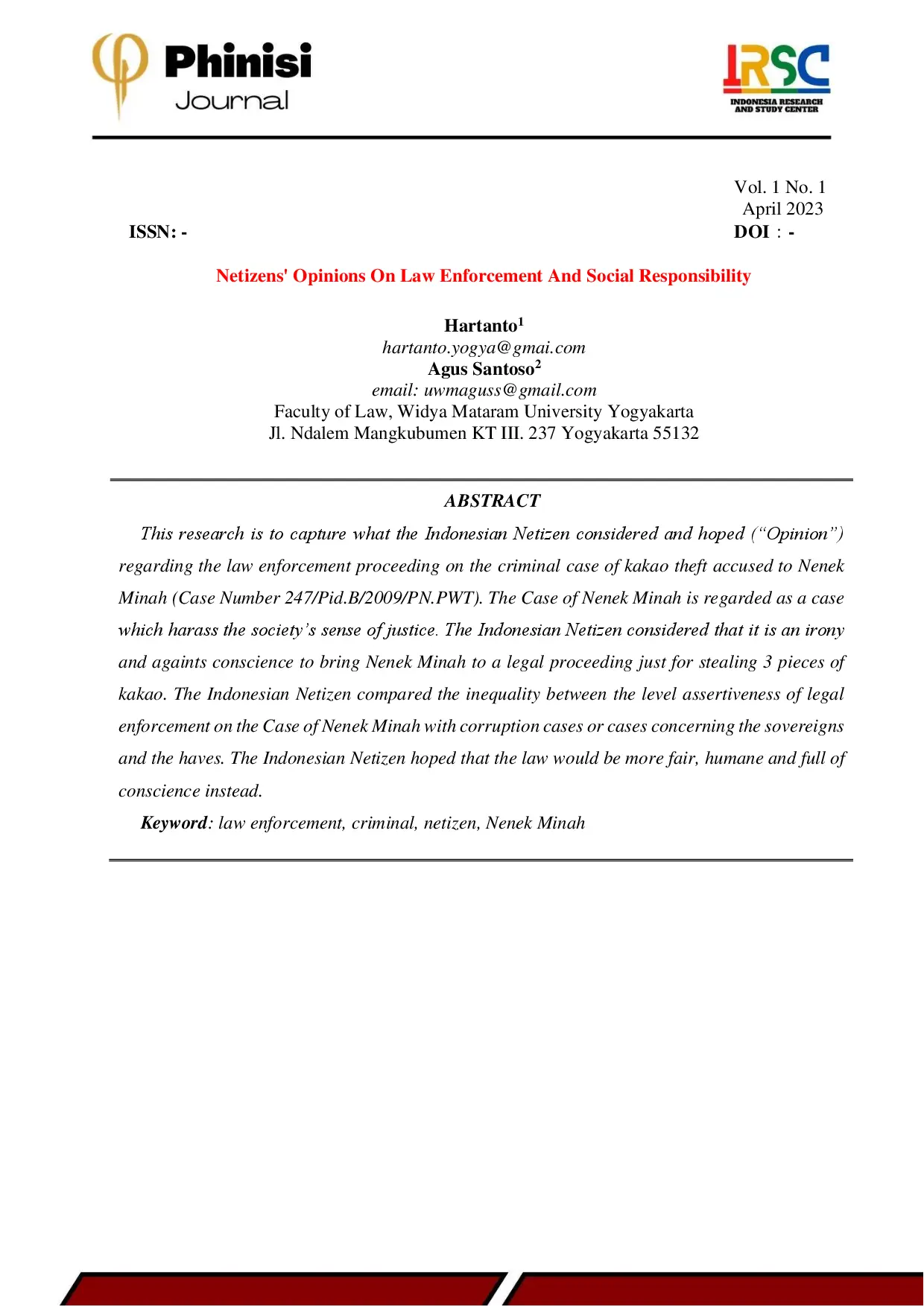
IRSCIRSC Kasus Nenek Minah dianggap sebagai kasus yang mengganggu rasa keadilan masyarakat. Warganet Indonesia memandang bahwa hal tersebut merupakan ironi danKasus Nenek Minah dianggap sebagai kasus yang mengganggu rasa keadilan masyarakat. Warganet Indonesia memandang bahwa hal tersebut merupakan ironi dan

SALNESIASALNESIA Akses terhadap sanitasi yang aman merupakan kebutuhan dasar manusia yang esensial, khususnya bagi masyarakat pesisir yang rentan terhadap pencemaran lingkunganAkses terhadap sanitasi yang aman merupakan kebutuhan dasar manusia yang esensial, khususnya bagi masyarakat pesisir yang rentan terhadap pencemaran lingkungan
Useful /

E GREENATIONE GREENATION Penelitian ini menyoroti meningkatnya kesadaran akan keberlanjutan dan teknologi di kalangan kaum muda, dengan implikasi bagi strategi pemasaran yang ditargetkan.Penelitian ini menyoroti meningkatnya kesadaran akan keberlanjutan dan teknologi di kalangan kaum muda, dengan implikasi bagi strategi pemasaran yang ditargetkan.

UNBUNB Hasil penelitian menunjukkan bahwa daya laser yang lebih tinggi (7,5 watt) menghasilkan warna kayu yang lebih gelap dan kontras, dengan penurunan nilaiHasil penelitian menunjukkan bahwa daya laser yang lebih tinggi (7,5 watt) menghasilkan warna kayu yang lebih gelap dan kontras, dengan penurunan nilai

JRTPPIJRTPPI Variasi CNT menghasilkan tegangan lentur tertinggi sebesar 133,89 MPa, diikuti oleh variasi tanpa nanopartikel (98,59 MPa), tanpa perlakuan permukaan (91,76Variasi CNT menghasilkan tegangan lentur tertinggi sebesar 133,89 MPa, diikuti oleh variasi tanpa nanopartikel (98,59 MPa), tanpa perlakuan permukaan (91,76
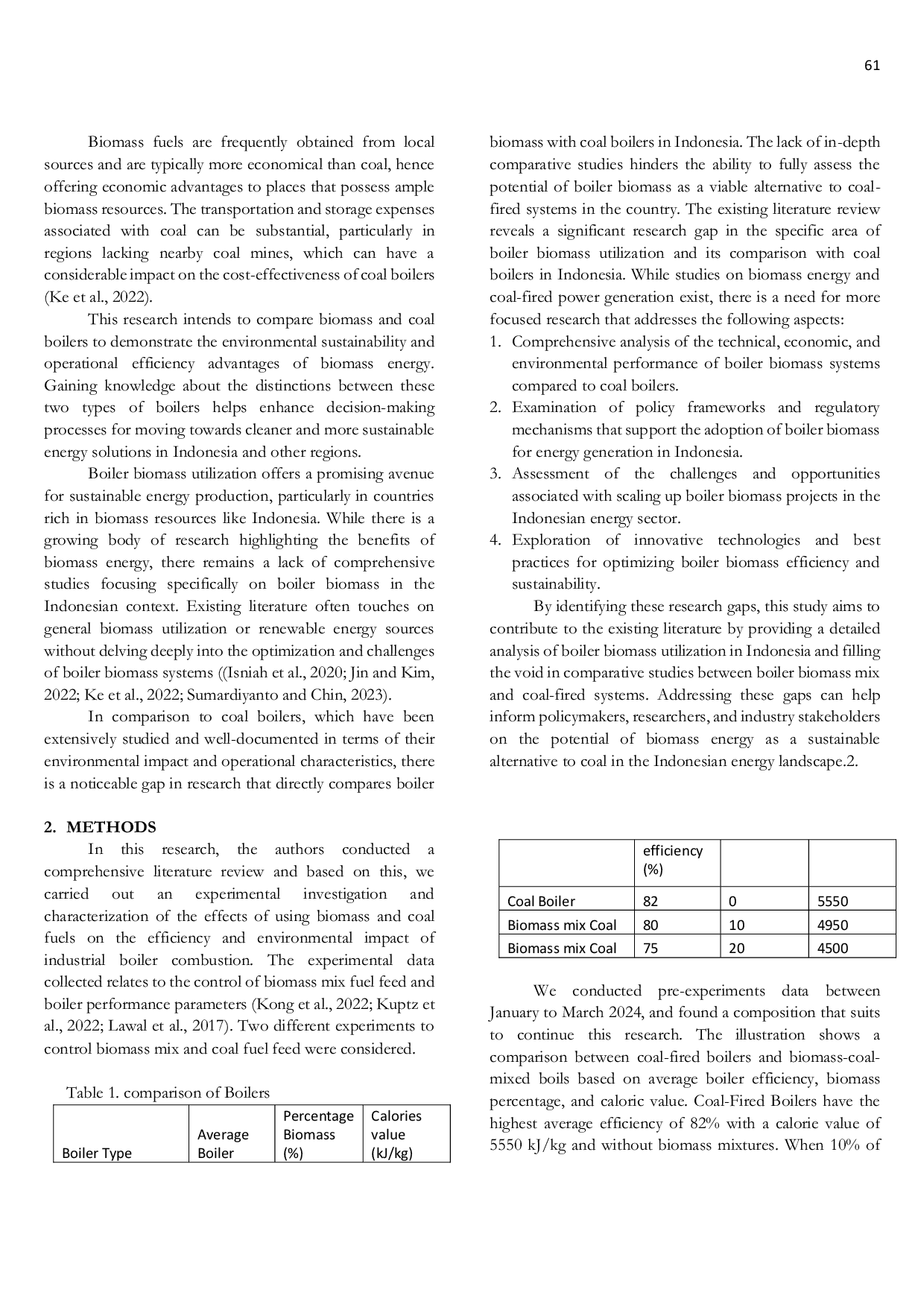
JRTPPIJRTPPI Literatur yang ada menyoroti keunggulan energi biomassa secara umum tetapi kurang dalam memberikan analisis komprehensif tentang boiler biomassa dan perbandingannyaLiteratur yang ada menyoroti keunggulan energi biomassa secara umum tetapi kurang dalam memberikan analisis komprehensif tentang boiler biomassa dan perbandingannya