ITBITB
Journal of ICT Research and ApplicationsJournal of ICT Research and ApplicationsUniversities have an important role in providing quality education to their students so they can build a foundation for their future. However, a problem that often arises is that the process experienced will be different for each individual. Therefore, it is necessary to apply on-time graduation predictions for students with academic attributes in the hope that educational institutions can better understand student conditions and maximize on-time student graduation. In this study, a deep learning method was implemented to help predict on-time graduation for students at the Faculty of Computer Science, University of Brawijaya. Based on the test results and hyperparameter tuning using Optuna, the best hyperparameter configuration for the deep learning method consisted of number of layer combinations = 4; first-layer nodes = 118; first dropout = 0.3393; second-layer nodes = 83; second dropout = 0.0349; third-layer nodes = 88; third dropout = 0.0491; fourth-layer nodes = 65; fourth dropout = 0.4169; number of epochs = 244; learning rate = 0.0710; and optimizer = SGD. Thus, an accuracy rate of 86.61% was achieved for the two classes of the test data set, i.e., on-time graduation and not on-time graduation.
This research concludes that the deep learning method is the most optimal method for predicting student graduation.The best hyperparameter configuration achieved an accuracy of 86.The study highlights the importance of deep learning in understanding student conditions and maximizing on-time graduation rates.Further research should focus on addressing the remaining shortcomings, such as the indication of overfitting, by incorporating more data and exploring alternative hyperparameter tuning methods.
Berdasarkan hasil penelitian ini, terdapat beberapa saran untuk penelitian lanjutan. Pertama, penelitian selanjutnya dapat memperluas dataset yang digunakan dengan mengumpulkan data dari periode yang lebih panjang dan melibatkan lebih banyak mahasiswa untuk mengurangi potensi overfitting dan meningkatkan generalisasi model. Kedua, eksplorasi metode optimasi hyperparameter yang lebih canggih, seperti Bayesian optimization atau evolutionary algorithms, dapat dilakukan untuk menemukan konfigurasi hyperparameter yang lebih optimal dan meningkatkan akurasi prediksi. Ketiga, penelitian dapat diperluas dengan mempertimbangkan faktor-faktor non-akademik seperti partisipasi dalam kegiatan ekstrakurikuler, kondisi sosial ekonomi mahasiswa, dan dukungan keluarga sebagai variabel input tambahan dalam model prediksi, dengan tujuan untuk memberikan gambaran yang lebih komprehensif tentang faktor-faktor yang mempengaruhi kelulusan tepat waktu. Penelitian-penelitian ini diharapkan dapat memberikan wawasan yang lebih mendalam dan berkontribusi pada pengembangan sistem prediksi kelulusan yang lebih akurat dan efektif.
| File size | 635.04 KB |
| Pages | 20 |
| DMCA | Report |
Related /
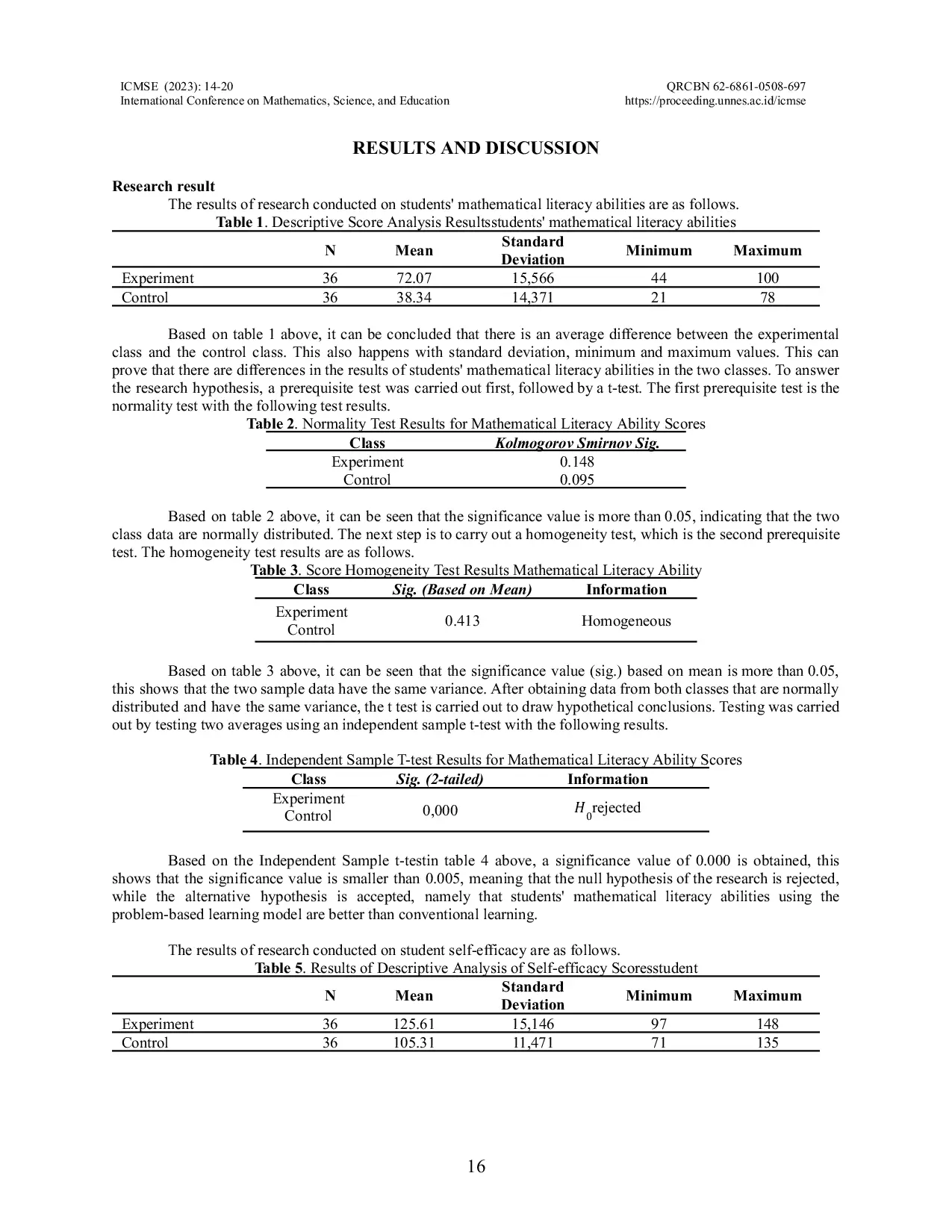
UNNESUNNES Dengan demikian, model PBL terbukti lebih efektif dalam meningkatkan literasi matematika dan self-efficacy siswa. Model pembelajaran berbasis masalah (PBL)Dengan demikian, model PBL terbukti lebih efektif dalam meningkatkan literasi matematika dan self-efficacy siswa. Model pembelajaran berbasis masalah (PBL)
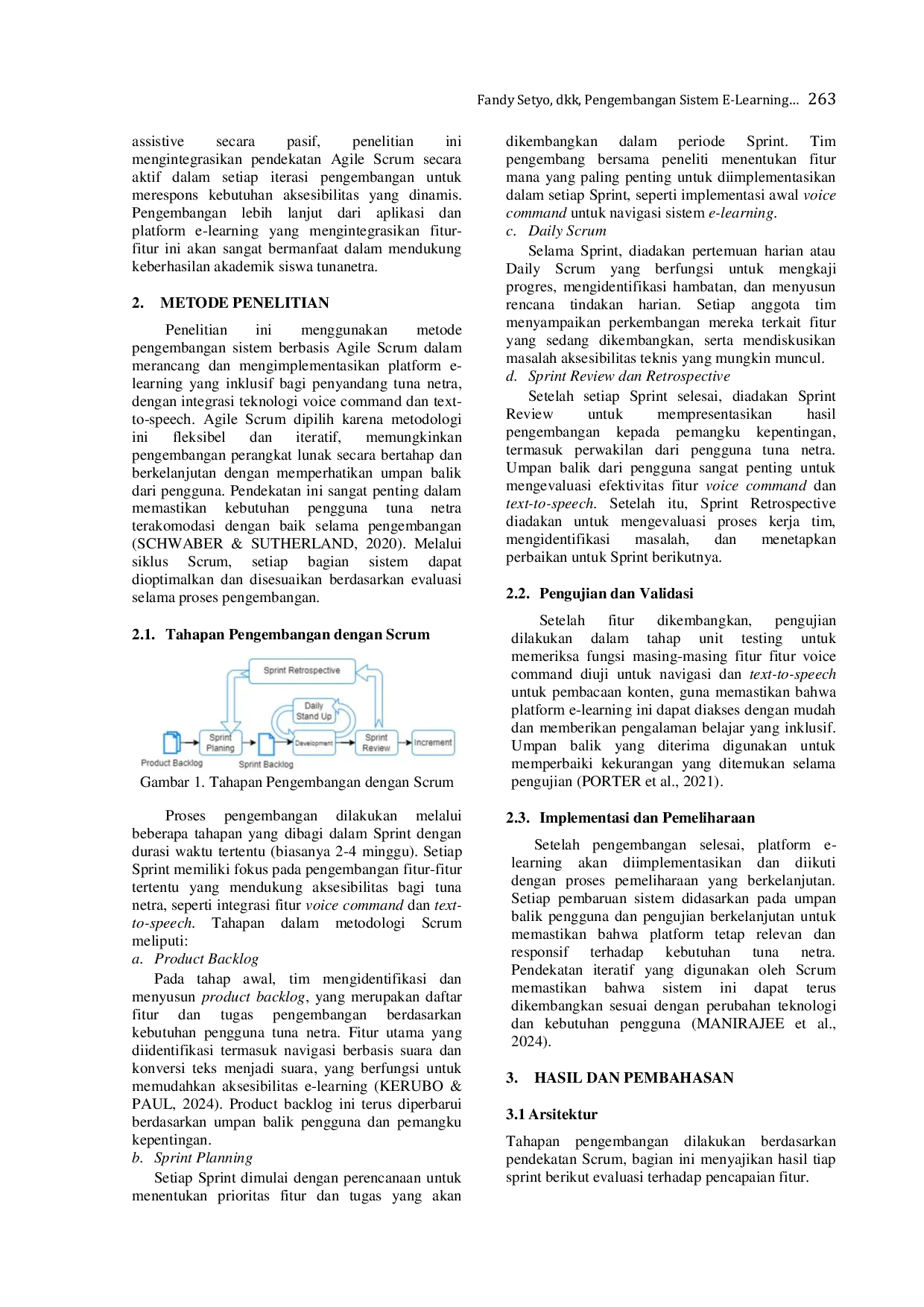
UBUB Hasil dokumentasi sprint menunjukkan bahwa fitur ini berfungsi sesuai dengan skenario pengujian internal dan berpotensi meningkatkan aksesibilitas. MeskipunHasil dokumentasi sprint menunjukkan bahwa fitur ini berfungsi sesuai dengan skenario pengujian internal dan berpotensi meningkatkan aksesibilitas. Meskipun

UBUB Tanpa mekanisme kendali, pendulum akan terus jatuh akibat gaya gravitasi karena sistem sangat tidak stabil. Pada studi ini, metode kendali Linear QuadraticTanpa mekanisme kendali, pendulum akan terus jatuh akibat gaya gravitasi karena sistem sangat tidak stabil. Pada studi ini, metode kendali Linear Quadratic
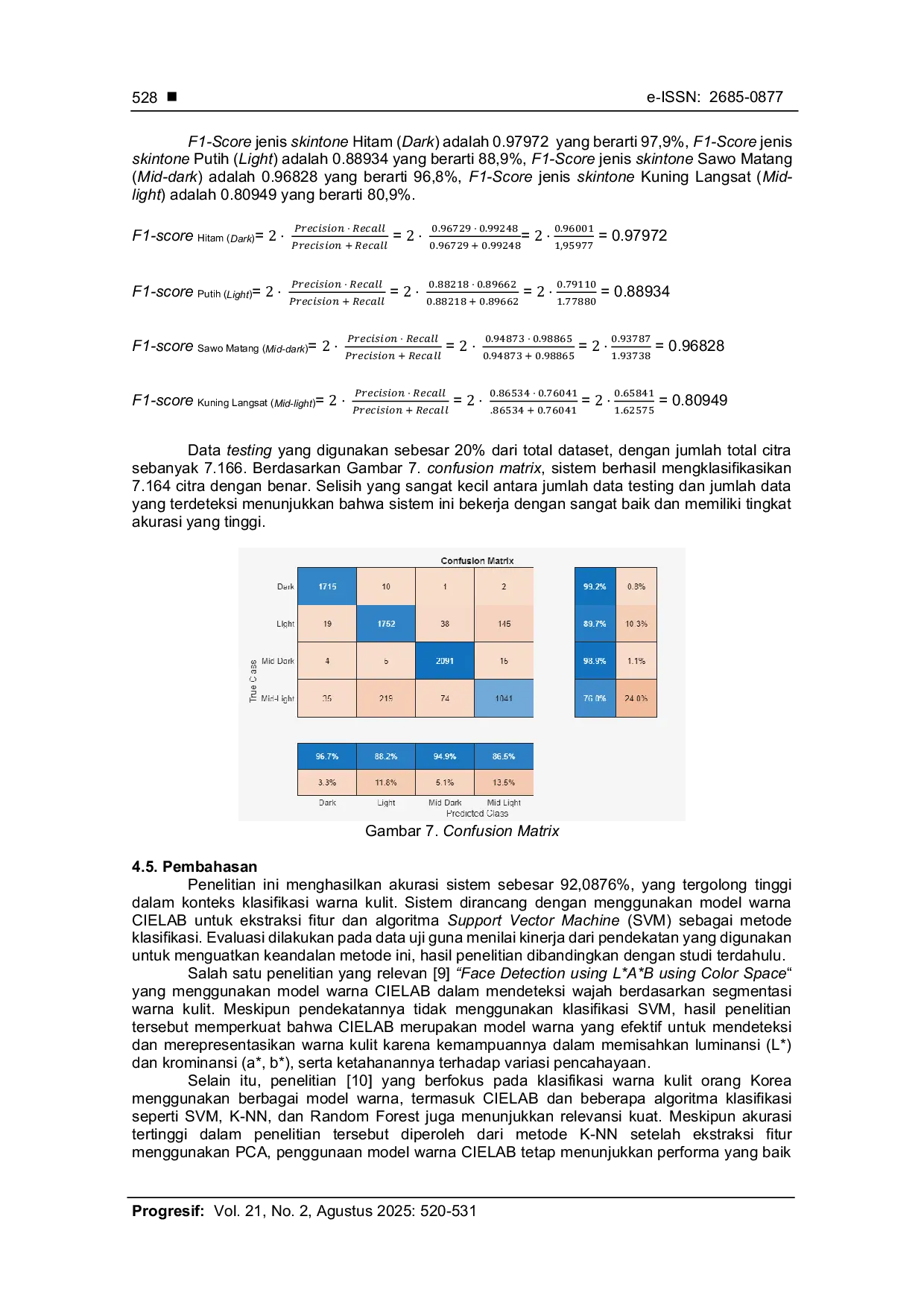
STMIK BANJARBARUSTMIK BANJARBARU Tahapan praproses yang meliputi perubahan ukuran citra dan konversi ke ruang warna CIELAB. Ekstraksi fitur dilakukan dengan menghitung rata-rata sertaTahapan praproses yang meliputi perubahan ukuran citra dan konversi ke ruang warna CIELAB. Ekstraksi fitur dilakukan dengan menghitung rata-rata serta

IVETIVET Tema-tema tersebut selanjutnya terbagi atas beberapa sub tema. Tema Kemudahan Penggunaan terbagi atas sub tema Mudah Digunakan, Mudah Dipahami, dan Menarik.Tema-tema tersebut selanjutnya terbagi atas beberapa sub tema. Tema Kemudahan Penggunaan terbagi atas sub tema Mudah Digunakan, Mudah Dipahami, dan Menarik.

IVETIVET Penelitian yang akan dilakukan adalah penelitian eksperimen, dengan tahapan pengumpulan data, pengolahan data awal (data pre-prosesing), metode data yangPenelitian yang akan dilakukan adalah penelitian eksperimen, dengan tahapan pengumpulan data, pengolahan data awal (data pre-prosesing), metode data yang

IVETIVET Efisiensi energi panel surya sangat dipengaruhi oleh orientasi panel terhadap posisi matahari. Untuk meningkatkan efisiensi tersebut, penelitian ini bertujuanEfisiensi energi panel surya sangat dipengaruhi oleh orientasi panel terhadap posisi matahari. Untuk meningkatkan efisiensi tersebut, penelitian ini bertujuan
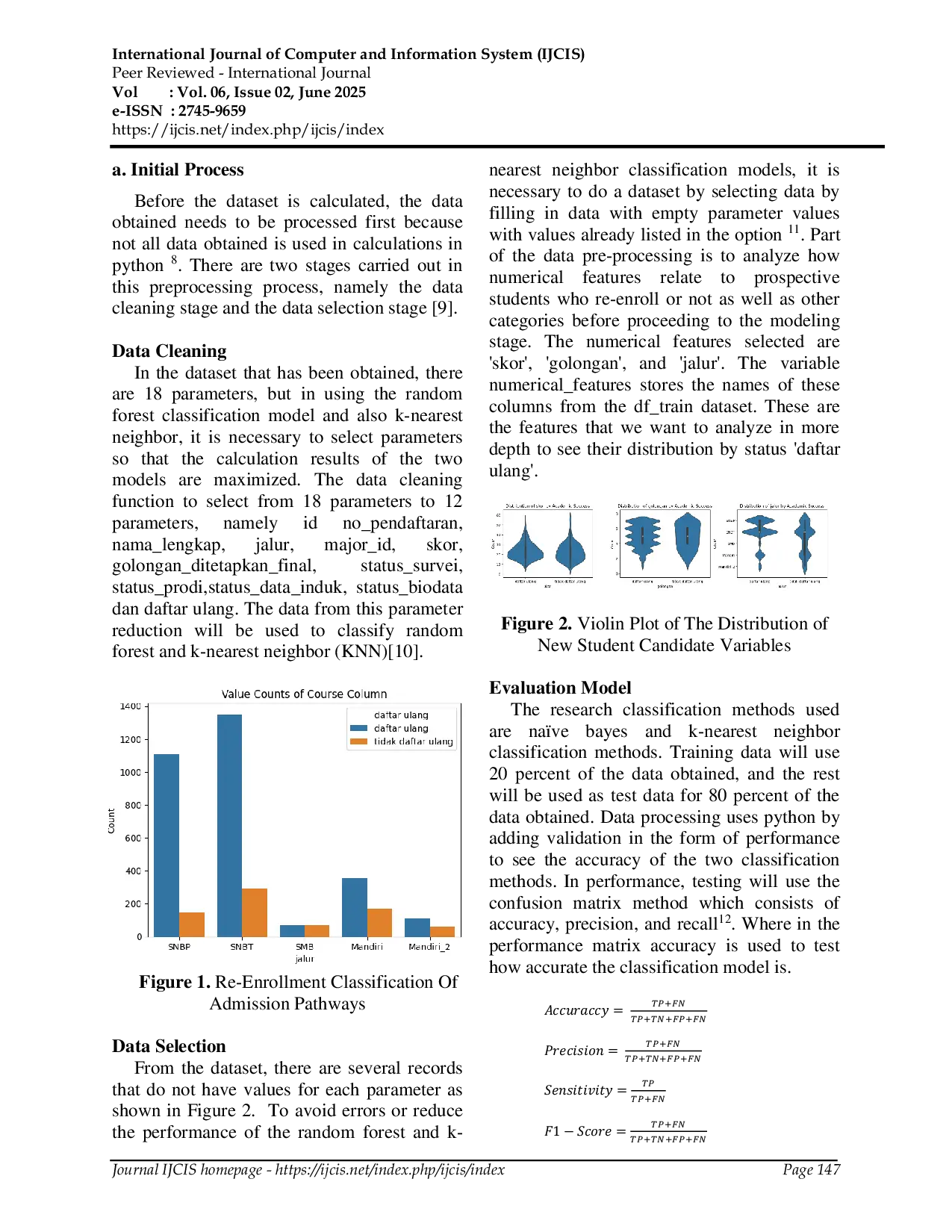
IJCISIJCIS Suksesnya setiap input perguruan tinggi berasal dari hal ini. Polimedia selalu melakukan penerimaan mahasiswa baru setiap tahun dengan berbagai strategiSuksesnya setiap input perguruan tinggi berasal dari hal ini. Polimedia selalu melakukan penerimaan mahasiswa baru setiap tahun dengan berbagai strategi
Useful /
UNNESUNNES Kedua hal ini sangat cocok untuk dijalankan dalam project-based learning. Karena proyek membawa siswa mengembangkan ide dan menjadi kreatif sesuai denganKedua hal ini sangat cocok untuk dijalankan dalam project-based learning. Karena proyek membawa siswa mengembangkan ide dan menjadi kreatif sesuai dengan

ITBITB Kinerja sistem yang diusulkan, dievaluasi menggunakan modulasi QPSK, menunjukkan peningkatan kinerja bit error rate dan mengungguli modulasi orde tinggi,Kinerja sistem yang diusulkan, dievaluasi menggunakan modulasi QPSK, menunjukkan peningkatan kinerja bit error rate dan mengungguli modulasi orde tinggi,

IBSIBS Mobile Legends Bang Bang (MLBB) merupakan salah satu game ponsel terpopuler di Indonesia. Sejak diluncurkan pada tahun 2016, game ini dapat dimainkan olehMobile Legends Bang Bang (MLBB) merupakan salah satu game ponsel terpopuler di Indonesia. Sejak diluncurkan pada tahun 2016, game ini dapat dimainkan oleh

IBSIBS Perencanaan/penelitian ini tentang Pengaruh Pelatihan, Motivasi, dan Kepuasan Kerja terhadap Kinerja Karyawan dengan tujuan untuk mengetahu pengaruh pelatihan,Perencanaan/penelitian ini tentang Pengaruh Pelatihan, Motivasi, dan Kepuasan Kerja terhadap Kinerja Karyawan dengan tujuan untuk mengetahu pengaruh pelatihan,