JURNALFAMILIAJURNALFAMILIA
Familia: Jurnal Hukum KeluargaFamilia: Jurnal Hukum KeluargaIslam provides clear household guidelines to obtain harmony (sakinah). However, many contemporary Muslim families face dynamic challenges, particularly debates surrounding the role of wives. While previous studies have examined family harmony from various perspectives, empirical research on the lived experiences of Salafi wives remains limited. This study addresses that gap by exploring how the wives of Salafi ustadz in Jember understand and practice household harmony within the framework of Islamic teachings. Using a qualitative case study approach with purposive sampling, ten respondents were interviewed and observed. The findings reveal five key perspectives on achieving harmony: (1) choosing a religious husband; (2) possessing and applying Islamic knowledge; (3) maintaining good communication; (4) orienting toward afterlife happiness; and (5) prioritizing faith over emotional dependency. At the same time, they identified four major challenges: (1) balancing domestic and gendered responsibilities; (2) negotiating religious identity in a conflicting social environment; (3) addressing emotional and communication needs; and (4) managing economic difficulties. This study contributes to Islamic family law and gender discourse by demonstrating how Salafi wives integrate Quran- and Sunnah-based principles into family life while navigating modern household dynamics.
The wives of Salafi ustadz ground household harmony in piety, religious knowledge, and steadfast faith, viewing it not merely as a social expectation but as a deliberate religious practice.They navigate contemporary challenges—shifting gender roles, economic pressures, and social influences—by adhering to Islamic principles.Maintaining harmony involves choosing a religious husband, possessing Islamic knowledge, fostering good communication, orienting towards the afterlife, and prioritizing faith over emotional needs.These findings highlight the importance of reinforcing Islamic family values through community programs and premarital counseling to strengthen family resilience and reduce divorce rates.
Further research should explore the impact of economic empowerment on the well-being of Salafi wives, investigating whether financial independence strengthens or alters traditional family dynamics. Additionally, a comparative study examining the experiences of Salafi wives across different regions of Indonesia could reveal variations in their approaches to household harmony and the challenges they face. Finally, longitudinal studies tracking the long-term effects of religious education and community support programs on marital stability within Salafi families are needed to assess the effectiveness of interventions aimed at promoting harmonious family life. These studies should employ mixed-methods approaches, combining quantitative data on marital satisfaction and divorce rates with qualitative interviews to gain a deeper understanding of the lived experiences of Salafi wives and their families, contributing to more effective family support policies and interventions.
- Problem of Domestic Violence and Its Solutions in the Light of Maqasid Shariah | Bin Muhammad Husni |... ccsenet.org/journal/index.php/ass/article/view/52359Problem of Domestic Violence and Its Solutions in the Light of Maqasid Shariah Bin Muhammad Husni ccsenet journal index php ass article view 52359
- Komunikasi Interpersonal dalam Mediasi Permasalahan Pasangan Suami Istri di Pengadilan Agama Banyuwangi... doi.org/10.35719/icon.v1i1.5Komunikasi Interpersonal dalam Mediasi Permasalahan Pasangan Suami Istri di Pengadilan Agama Banyuwangi doi 10 35719 icon v1i1 5
| File size | 838.26 KB |
| Pages | 19 |
| DMCA | Report |
Related /

POLITEKNIKYAKPERMASPOLITEKNIKYAKPERMAS Penelitian ini bertujuan untuk mengetahui hubungan antara pengetahuan dan sikap ibu dengan status gizi anak usia 1-3 tahun di Desa Guwo. Metode MenggunakanPenelitian ini bertujuan untuk mengetahui hubungan antara pengetahuan dan sikap ibu dengan status gizi anak usia 1-3 tahun di Desa Guwo. Metode Menggunakan

STIKESALMAARIFSTIKESALMAARIF Diabetes mellitus type 2 is a chronic metabolic disease characterized by hyperglycemia due to impaired insulin secretion, insulin action, or both. MedicationDiabetes mellitus type 2 is a chronic metabolic disease characterized by hyperglycemia due to impaired insulin secretion, insulin action, or both. Medication

IJBLEIJBLE Kemampuan keuangan menjadi keunggulan dalam mengembangkan rasa percaya diri mahasiswa sehingga mereka dapat mengambil keputusan yang lebih percaya diriKemampuan keuangan menjadi keunggulan dalam mengembangkan rasa percaya diri mahasiswa sehingga mereka dapat mengambil keputusan yang lebih percaya diri

IJBLEIJBLE Dari ketiga faktor tersebut, ketahanan keuangan muncul sebagai yang paling berpengaruh, menegaskan peran kritis persiapan strategis, adaptabilitas, danDari ketiga faktor tersebut, ketahanan keuangan muncul sebagai yang paling berpengaruh, menegaskan peran kritis persiapan strategis, adaptabilitas, dan

IJBLEIJBLE Subjek N mampu mempertahankan prestasi akademik dan non-akademik meskipun ada kendala waktu karena membantu ekonomi keluarga dengan berjualan pentol danSubjek N mampu mempertahankan prestasi akademik dan non-akademik meskipun ada kendala waktu karena membantu ekonomi keluarga dengan berjualan pentol dan

UMNUMN Pendekatan yang digunakan adalah metode bimbingan melalui pendampingan praktik langsung membaca Alquran bagi anak-anak usia standar Pendidikan TingkatPendekatan yang digunakan adalah metode bimbingan melalui pendampingan praktik langsung membaca Alquran bagi anak-anak usia standar Pendidikan Tingkat

UMNUMN Program ini menumbuhkan kesadaran baru mengenai signifikansi kesehatan mental dalam konteks budaya. Saran meliputi pengintegrasian nilai-nilai budaya dalamProgram ini menumbuhkan kesadaran baru mengenai signifikansi kesehatan mental dalam konteks budaya. Saran meliputi pengintegrasian nilai-nilai budaya dalam

POLTEKKESGORONTALOPOLTEKKESGORONTALO 000), indicating the potential of this complementary therapy. This study provides a foundation for further research to optimize methodologies and expand000), indicating the potential of this complementary therapy. This study provides a foundation for further research to optimize methodologies and expand
Useful /
IJBLEIJBLE Temuan ini menekankan pentingnya pendekatan holistik dalam pengembangan SBO - yang menggabungkan penyesuaian nilai internal, kolaborasi eksternal, danTemuan ini menekankan pentingnya pendekatan holistik dalam pengembangan SBO - yang menggabungkan penyesuaian nilai internal, kolaborasi eksternal, dan

IJBLEIJBLE Penelitian ini menyelidiki kepastian hukum dan interpretasi Persekutuan Perdata bagi Notaris di bawah Undang-Undang Jabatan Notaris. Tujuan penelitianPenelitian ini menyelidiki kepastian hukum dan interpretasi Persekutuan Perdata bagi Notaris di bawah Undang-Undang Jabatan Notaris. Tujuan penelitian
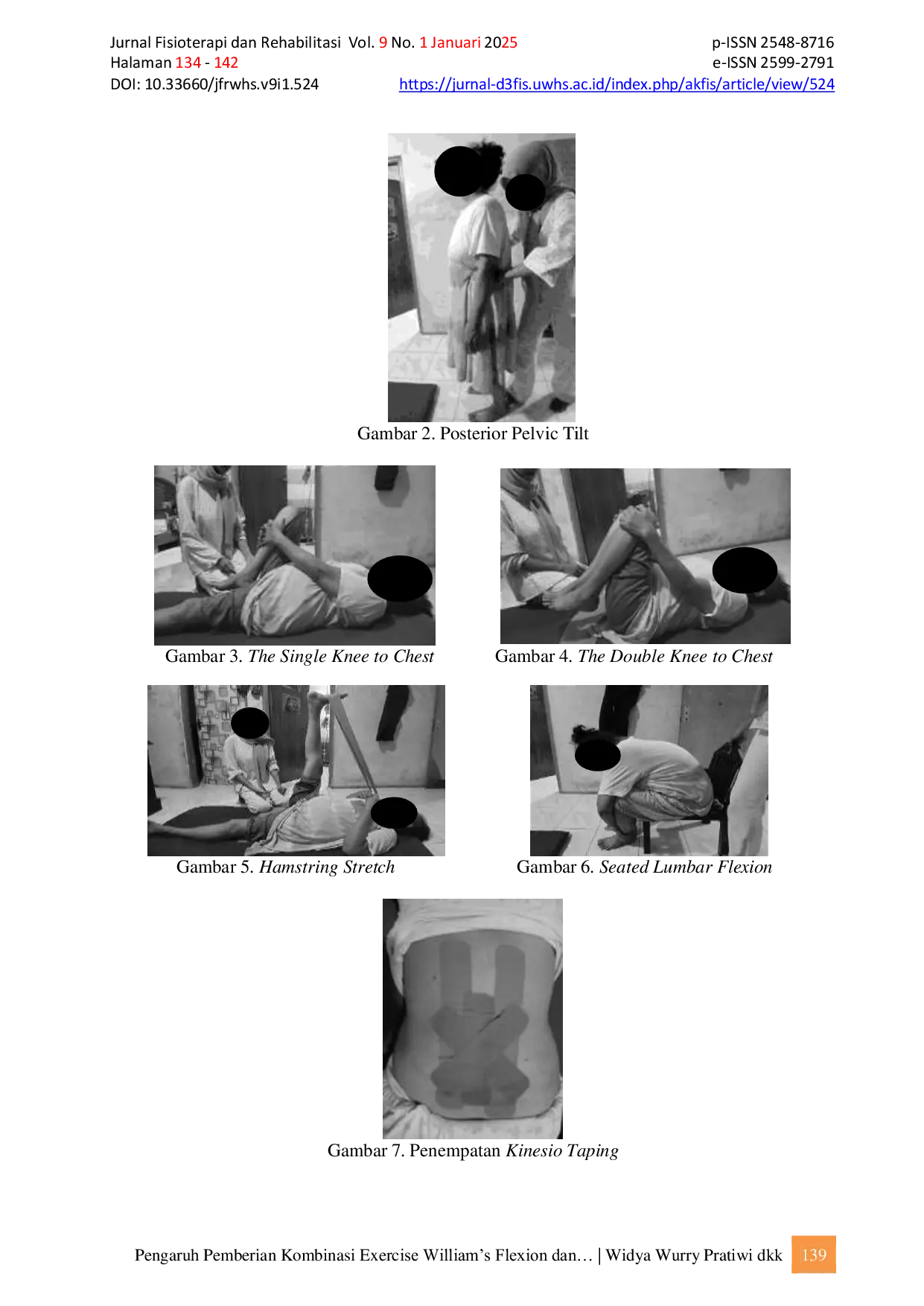
UWHSUWHS Kerusakan yang terjadi pada kartilago akan mengakibatkan timbulnya penebalan subchondral yang kemudian terjadi osteofit dan mengakibatkan penyempitan padaKerusakan yang terjadi pada kartilago akan mengakibatkan timbulnya penebalan subchondral yang kemudian terjadi osteofit dan mengakibatkan penyempitan pada
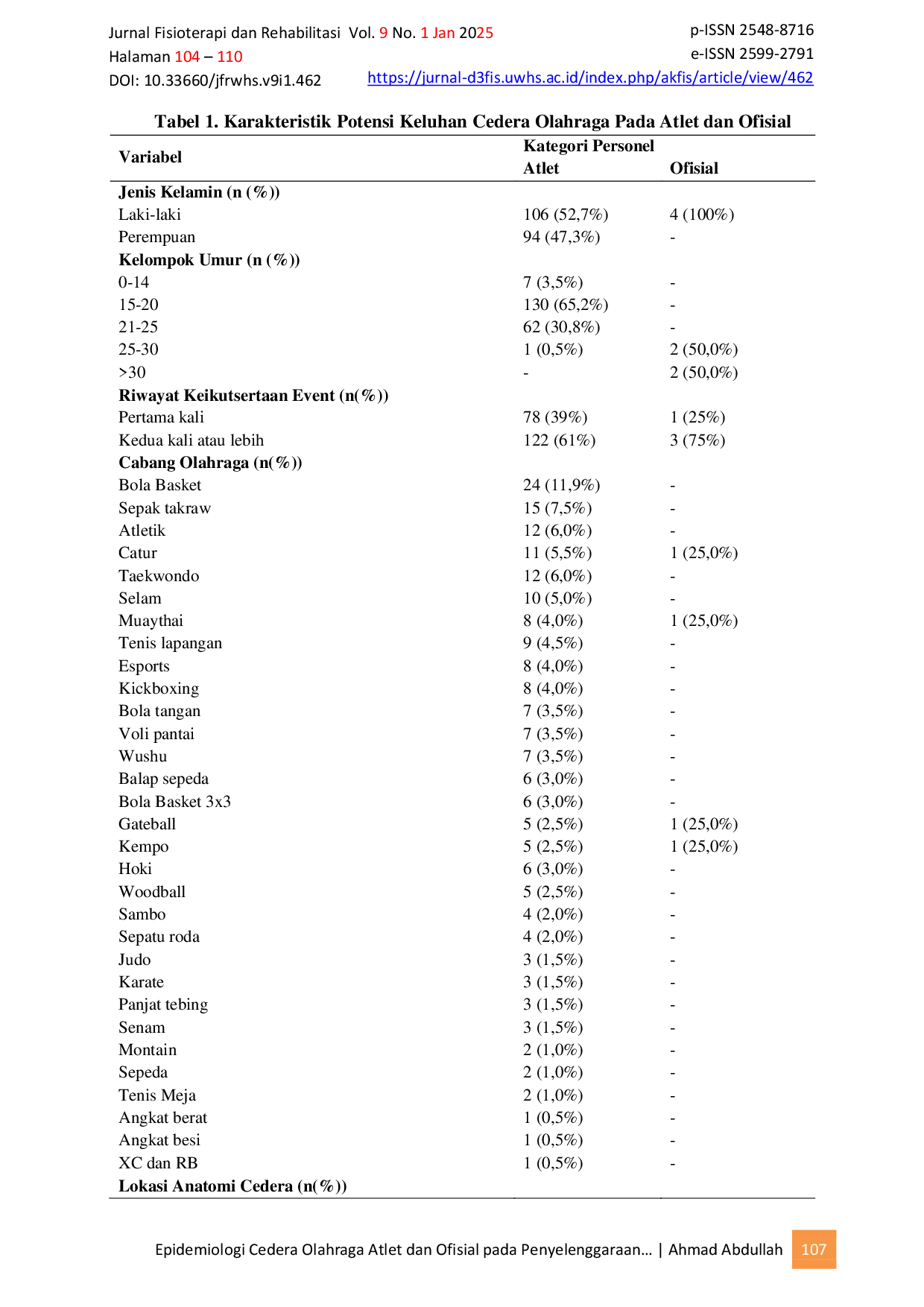
UWHSUWHS Hasil: Potensi keluhan cedera dialami oleh 200 atlet dan 4 ofisial, dengan kejadian tertinggi pada atlet laki-laki (52,7%) dan kelompok usia 15-20 tahunHasil: Potensi keluhan cedera dialami oleh 200 atlet dan 4 ofisial, dengan kejadian tertinggi pada atlet laki-laki (52,7%) dan kelompok usia 15-20 tahun