UMBUMB
SINERGISINERGIModifying the hull shape is one of the challenges in designing a ship. The angle of the ships entrance is a significant determinant of the total resistance of the ship. This research aimed to analyze the total resistance of the ship due to changes in the shape of the ships bow. This research used the Computational Fluid Dynamics (CFD) method with overset mesh technique to predict the ships total resistance and trim angle. Parameters used in the five-speed numerical simulations. This research indicated that a change in the bow angle of the ship results in a 5% change in the ships resistance for every change in the bow entrance angle. Therefore, the prediction of total resistance shows significant results in planning conditions. Compared to another bow entrance angle at low Fr, total resistance has no noticeable differences. Angle changes of the entrance of the ships bow also significantly affected the trim conditions on the ship according to the speed. At Fr 1.03, the stern trim angle tended to decrease dramatically. As a result, the trim by stern under porpoising probably oscillates considerably.
The research concluded that changes in the hull entrance angle significantly affect the total ship resistance, with a 5% change in resistance for each degree of change in the bow entrance angle.The analysis revealed that at lower Froude numbers (Fr < 0.67), a smaller bow angle reduces ship resistance, while at higher Froude numbers (Fr > 1), a larger bow angle is more effective.Ultimately, engineering the ships bow angle can improve the ships trim condition at specific speeds, impacting overall resistance.
Further research should investigate the impact of combining different bow entrance angles with various hull forms to optimize resistance reduction across a wider range of speeds and sea states. Additionally, exploring the use of advanced CFD techniques, such as Large Eddy Simulation (LES), could provide more detailed insights into the complex flow phenomena around the hull, particularly at high speeds where turbulence plays a significant role. Finally, a study focusing on the integration of active trim control systems, informed by the CFD simulations, could lead to the development of more efficient and stable high-speed planing vessels, potentially reducing energy consumption and improving operational performance. These investigations, building upon the current findings, will contribute to a more comprehensive understanding of planing hull hydrodynamics and facilitate the design of next-generation high-speed ships.
- Journal of Marine Science and Technology = 海洋學刊|Airiti Library 華藝線上圖書館. journal... doi.org/10.6119/JMSTJournal of Marine Science and Technology AUOOuAiriti Library ayoOunu journal doi 10 6119 JMST
- Verifikasi Deep-V Planing Hull Menggunakan Finite Volume Method Pada Kondisi Air Tenang | Samuel | TEKNIK.... doi.org/10.14710/teknik.v0i0.29391Verifikasi Deep V Planing Hull Menggunakan Finite Volume Method Pada Kondisi Air Tenang Samuel TEKNIK doi 10 14710 teknik v0i0 29391
- DESIGN MODELING OF SAVONIUS-DARRIEUS TURBINE FOR SEA CURRENT ELECTRIC POWER PLANT | Metheny | SINERGI.... publikasi.mercubuana.ac.id/index.php/sinergi/article/view/8137DESIGN MODELING OF SAVONIUS DARRIEUS TURBINE FOR SEA CURRENT ELECTRIC POWER PLANT Metheny SINERGI publikasi mercubuana ac index php sinergi article view 8137
| File size | 577.48 KB |
| Pages | 6 |
| DMCA | Report |
Related /
POLITEKNIK KEBUMENPOLITEKNIK KEBUMEN Oleh karena itu, pemerintah mulai membuka tempat-tempat yang berpotensi untuk menghasilkan energi terbarukan, terutama daerah yang tidak terjangkau listrikOleh karena itu, pemerintah mulai membuka tempat-tempat yang berpotensi untuk menghasilkan energi terbarukan, terutama daerah yang tidak terjangkau listrik
POLITEKNIK KEBUMENPOLITEKNIK KEBUMEN Penelitian yang dilakukan, menerapkan metode profile matching untuk melakukan perhitungan nilai dengan nilai standar. Dengan penggunaan metode ProfilePenelitian yang dilakukan, menerapkan metode profile matching untuk melakukan perhitungan nilai dengan nilai standar. Dengan penggunaan metode Profile
POLITEKNIK KEBUMENPOLITEKNIK KEBUMEN Pengujian informasi dilakukan dalam konsentrasi ini pada penggunaan strategi Partial Least Square (PLS) menggunakan format program WarpPLS 7. Hasil penelitianPengujian informasi dilakukan dalam konsentrasi ini pada penggunaan strategi Partial Least Square (PLS) menggunakan format program WarpPLS 7. Hasil penelitian
POLITEKNIK KEBUMENPOLITEKNIK KEBUMEN Perangkat multi-platform menjadi teknologi standar dalam pengembangan perangkat lunak. Namun, masalah multi-platform harus menyediakan sumber data singlePerangkat multi-platform menjadi teknologi standar dalam pengembangan perangkat lunak. Namun, masalah multi-platform harus menyediakan sumber data single
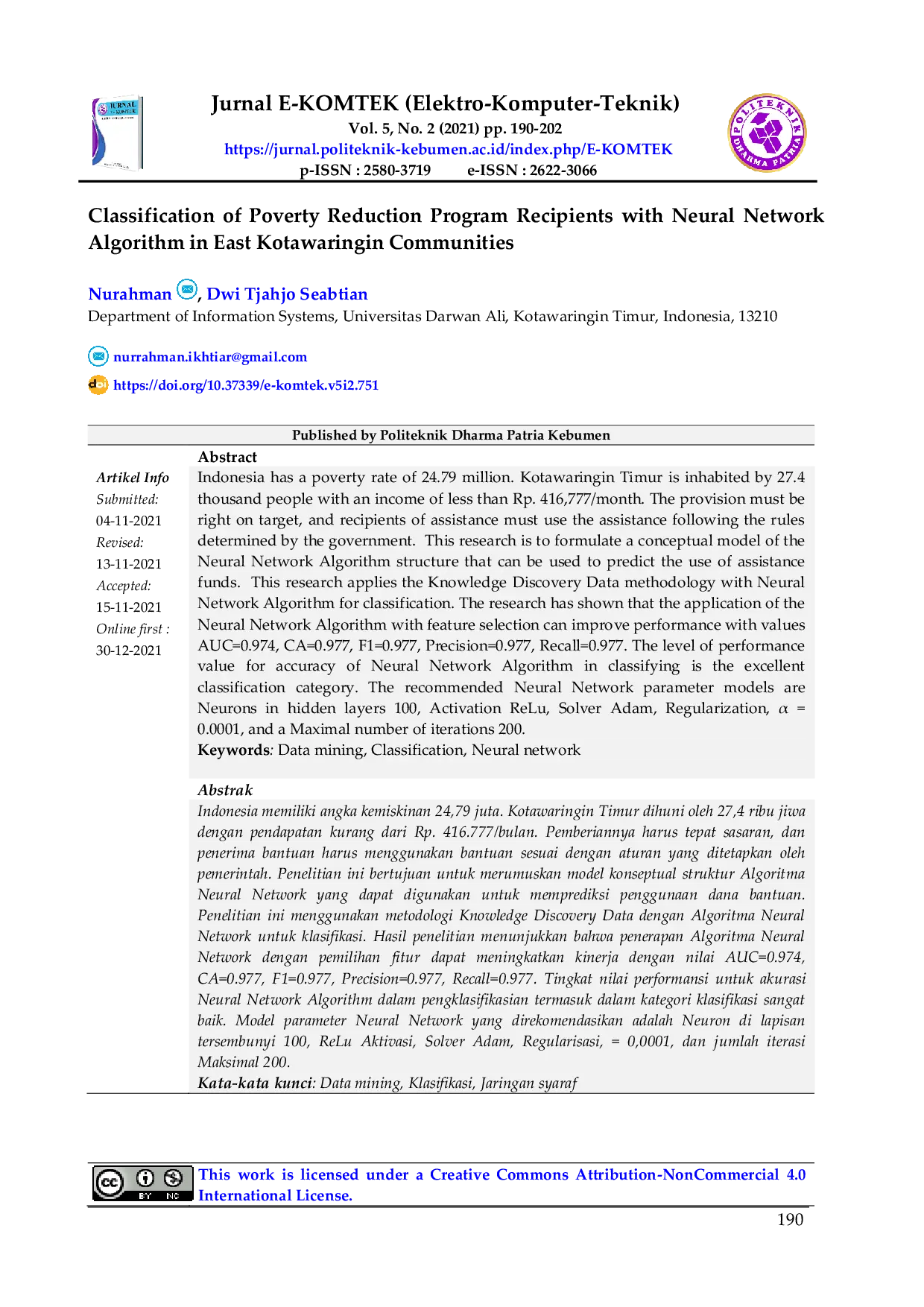
POLITEKNIK KEBUMENPOLITEKNIK KEBUMEN 0001, and a Maximal number of iterations 200. The research demonstrates that the application of the Neural Network Algorithm, particularly when combined0001, and a Maximal number of iterations 200. The research demonstrates that the application of the Neural Network Algorithm, particularly when combined

IPBIPB Sebagai perusahaan yang bergerak di sektor industri dengan memproduksi komponen tertentu dan terletak di kawasan industri, akan muncul dampak terhadapSebagai perusahaan yang bergerak di sektor industri dengan memproduksi komponen tertentu dan terletak di kawasan industri, akan muncul dampak terhadap

IPBIPB Pengelolaan eks HPH PT MJRT sebagai daerah penyangga Taman Nasional Kerinci Seblat masih kurang efektif, terlihat dari kondisi tutupan lahan yang hanyaPengelolaan eks HPH PT MJRT sebagai daerah penyangga Taman Nasional Kerinci Seblat masih kurang efektif, terlihat dari kondisi tutupan lahan yang hanya

UNHAJUNHAJ Pengabdian ini bertujuan untuk memberikan edukasi kepada siswa SMAN 8 Takengon Unggul terkait upaya pencegahan black campaign di media sosial sehinggaPengabdian ini bertujuan untuk memberikan edukasi kepada siswa SMAN 8 Takengon Unggul terkait upaya pencegahan black campaign di media sosial sehingga
Useful /
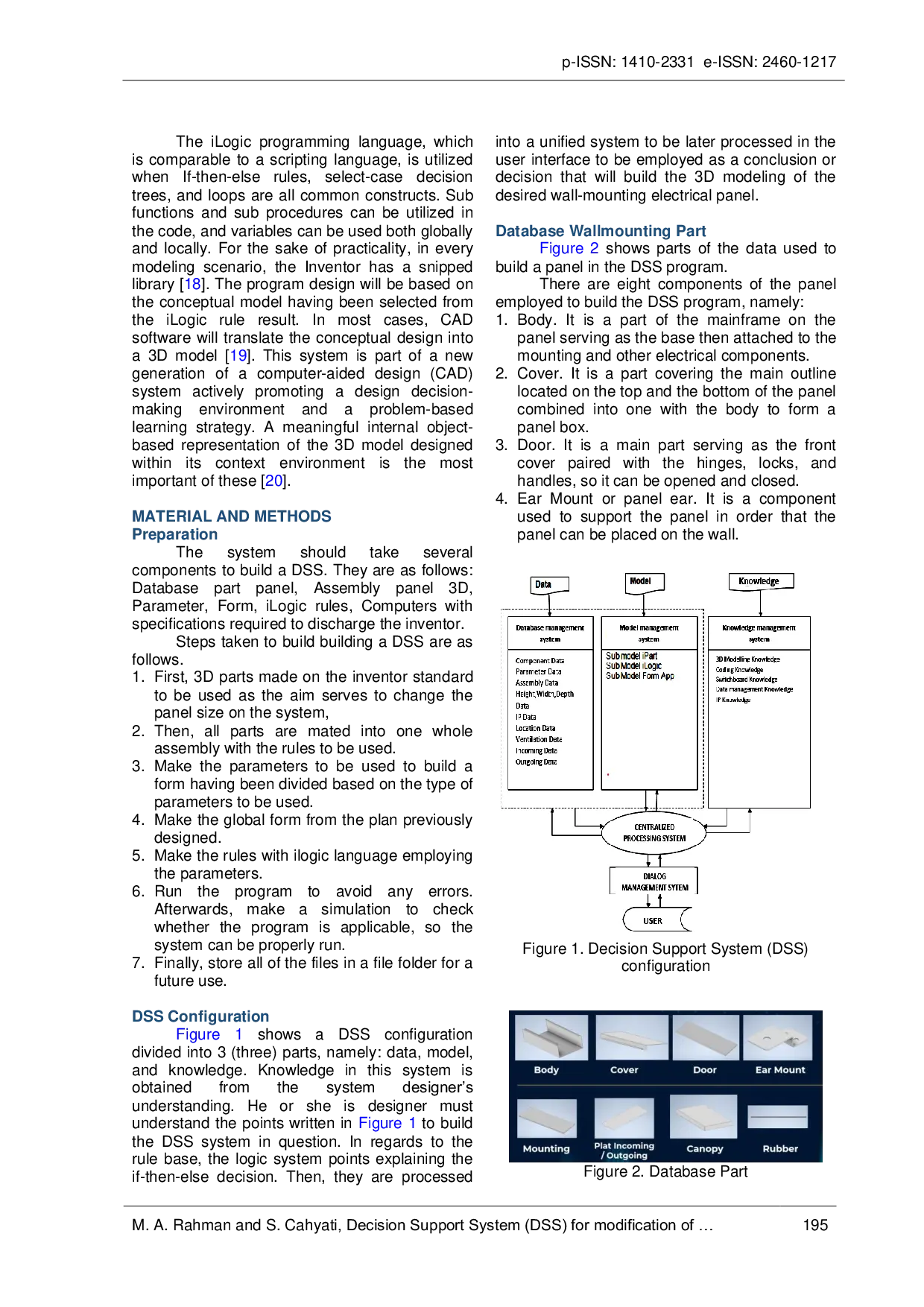
UMBUMB Basis data model 3D dari berbagai bagian panel pemasangan dinding dihasilkan dari pemodelan 3D. Kemudian, dengan menggunakan aturan if/then/else dalamBasis data model 3D dari berbagai bagian panel pemasangan dinding dihasilkan dari pemodelan 3D. Kemudian, dengan menggunakan aturan if/then/else dalam
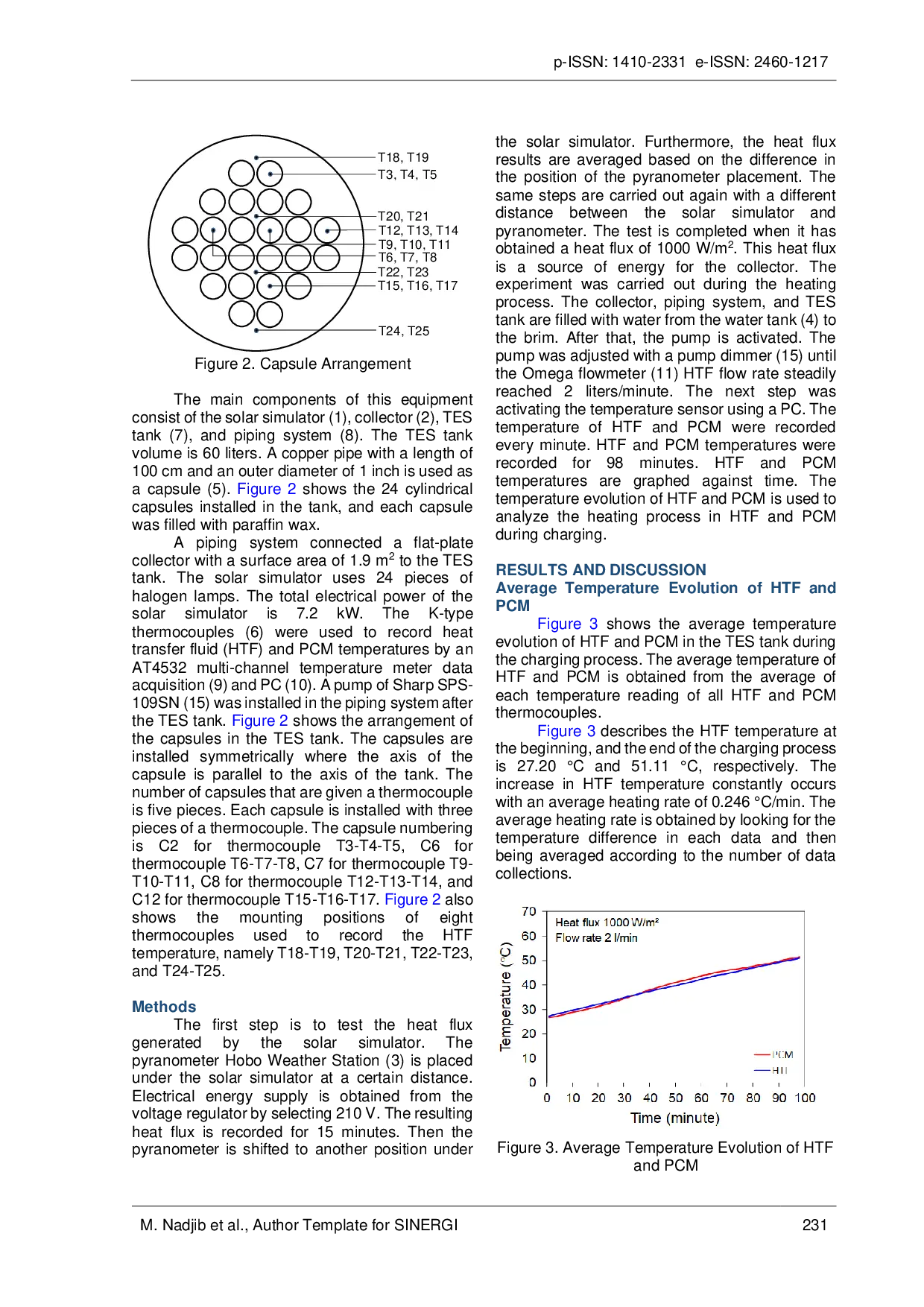
UMBUMB Kapsul yang dipasang di bagian atas memiliki peningkatan rata-rata laju pemanasan sebesar 111,4% dibandingkan dengan yang di bagian bawah. Oleh karenaKapsul yang dipasang di bagian atas memiliki peningkatan rata-rata laju pemanasan sebesar 111,4% dibandingkan dengan yang di bagian bawah. Oleh karena
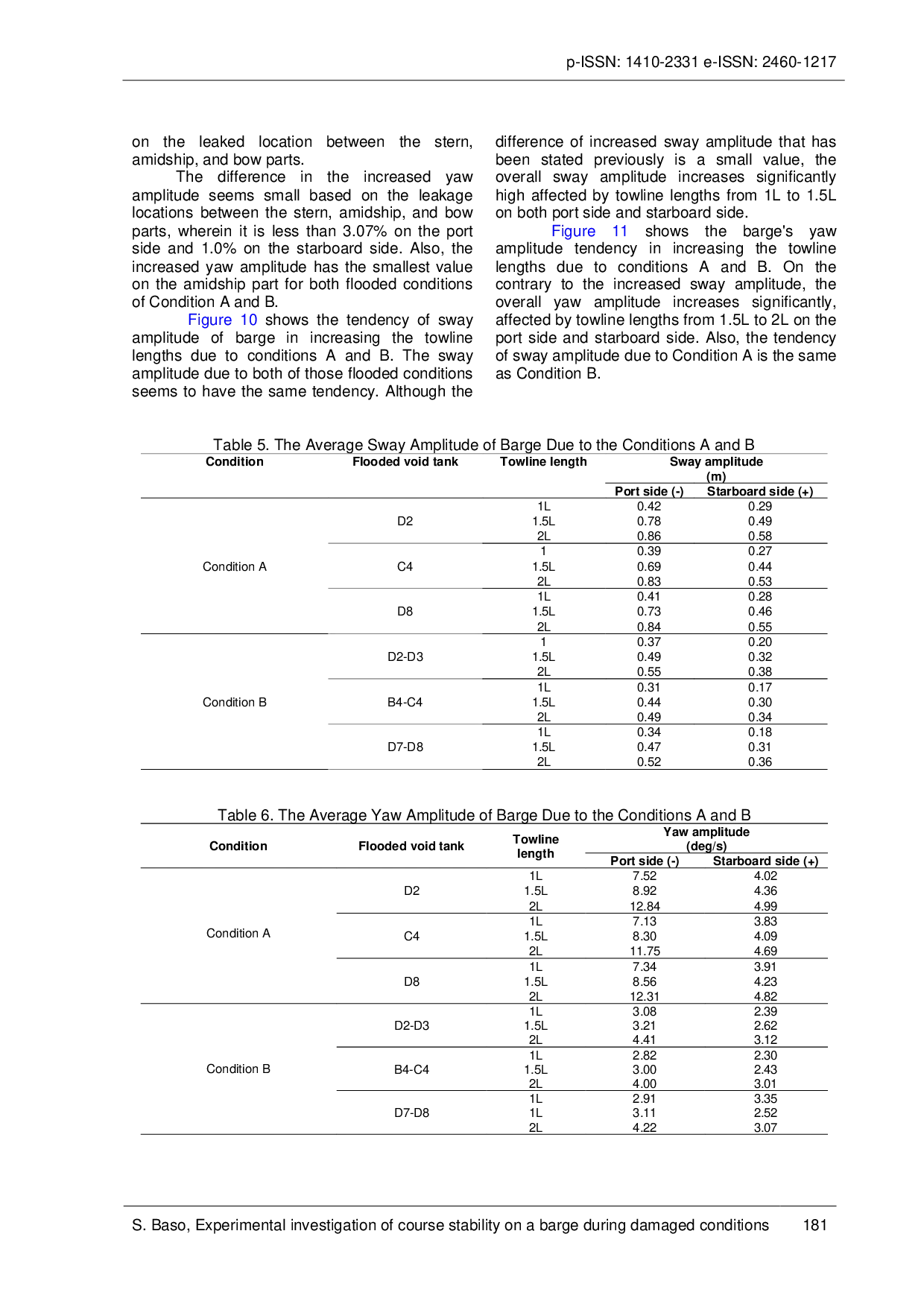
UMBUMB Nilai terkecil adalah peningkatan amplitudo goyangan dan yaw yang dipengaruhi oleh kondisi banjir satu atau dua tangki kosong yang berdekatan di bagianNilai terkecil adalah peningkatan amplitudo goyangan dan yaw yang dipengaruhi oleh kondisi banjir satu atau dua tangki kosong yang berdekatan di bagian
UMBUMB Penelitian ini menemukan bahwa peningkatan tekanan injeksi meningkatkan daya rem dan efisiensi termal rem mesin diesel, tetapi mengurangi konsumsi bahanPenelitian ini menemukan bahwa peningkatan tekanan injeksi meningkatkan daya rem dan efisiensi termal rem mesin diesel, tetapi mengurangi konsumsi bahan