IARNIARN
Indonesia Accounting Research JournalIndonesia Accounting Research JournalThis study aims to examine the integration of Activity-Based Costing (ABC) and the Theory of Constraints (TOC) as a conceptual framework for developing environmentally conscious and efficient environmental cost management. A systematic literature review was conducted on twenty relevant scientific publications to identify key patterns, findings, and integration opportunities between the two approaches. The results indicate that ABC enhances the accuracy of environmental cost information by tracing activity-based sources of energy waste, emissions, and waste generation, while TOC focuses on identifying and managing systemic constraints that limit efficiency and sustainability in production processes. The integration of ABC and TOC provides a comprehensive environmental cost management framework that goes beyond economic efficiency and strengthens organizational awareness of ecological limits. Conceptually, this synergy contributes to the advancement of environmental accounting as a knowledge-based system that links economic value with ecological responsibility and offers future development potential through digital technologies such as big data analytics, the Internet of Things (IoT), and artificial intelligence–based environmental management.
The study concludes that the synergy between Activity-Based Costing (ABC) and the Theory of Constraints (TOC) provides a comprehensive framework for environmental cost management that extends beyond conventional cost reduction strategies.ABC enables organizations to identify hidden environmental costs—such as energy use, emissions, and waste—through activity-based causal analysis, while TOC focuses on identifying systemic constraints that limit operational efficiency and environmental sustainability.The integration of these approaches creates a balance between analytical precision and strategic focus, allowing organizations to prioritize improvement efforts in areas where economic efficiency aligns with ecological responsibility.Strategically, this framework enables organizations to align economic performance with environmental carrying capacity by focusing improvement efforts on critical activities and constraints that simultaneously affect cost efficiency and ecological impact, thereby supporting proactive, responsible, and long-term sustainable value creation.
Berdasarkan latar belakang, metode, hasil, keterbatasan, dan saran penelitian lanjutan yang ada dalam paper, berikut adalah saran penelitian lanjutan yang baru: Pertama, penelitian selanjutnya dapat menginvestigasi bagaimana penerapan model ABC-TOC dapat diintegrasikan dengan sistem digital seperti IoT dan big data analytics untuk meningkatkan akurasi dan real-time monitoring biaya lingkungan. Kedua, penelitian dapat mengeksplorasi bagaimana faktor-faktor perilaku dan budaya organisasi mempengaruhi efektivitas implementasi model ABC-TOC dalam mendorong praktik keberlanjutan. Ketiga, penelitian dapat menguji efektivitas model ABC-TOC dalam konteks industri yang berbeda, seperti sektor jasa atau pariwisata, untuk mengidentifikasi tantangan dan peluang spesifik dalam pengelolaan biaya lingkungan. Integrasi ketiga saran ini akan memberikan pemahaman yang lebih komprehensif tentang bagaimana organisasi dapat memanfaatkan model ABC-TOC untuk mencapai efisiensi ekonomi dan keberlanjutan lingkungan secara bersamaan, serta mengidentifikasi faktor-faktor kunci yang mempengaruhi keberhasilan implementasi model tersebut. Dengan demikian, penelitian ini dapat memberikan kontribusi signifikan bagi pengembangan praktik akuntansi lingkungan yang lebih efektif dan relevan dalam mendukung pengambilan keputusan strategis yang bertanggung jawab secara sosial dan lingkungan.
| File size | 391.22 KB |
| Pages | 10 |
| DMCA | Report |
Related /

YWNRYWNR Analisis regresi berganda menunjukkan bahwa stabilitas keuangan memiliki pengaruh positif dan signifikan terhadap kecurangan laporan keuangan, sementaraAnalisis regresi berganda menunjukkan bahwa stabilitas keuangan memiliki pengaruh positif dan signifikan terhadap kecurangan laporan keuangan, sementara

YWNRYWNR 7 of 2021. These results highlight the importance of accurate tax calculation and internal controls to ensure compliance and minimize financial risk for7 of 2021. These results highlight the importance of accurate tax calculation and internal controls to ensure compliance and minimize financial risk for

YWNRYWNR Analisis mencakup rasio likuiditas, solvabilitas, profitabilitas, aktivitas, serta common size analisis struktur keuangan dan laporan laba rugi. HasilAnalisis mencakup rasio likuiditas, solvabilitas, profitabilitas, aktivitas, serta common size analisis struktur keuangan dan laporan laba rugi. Hasil
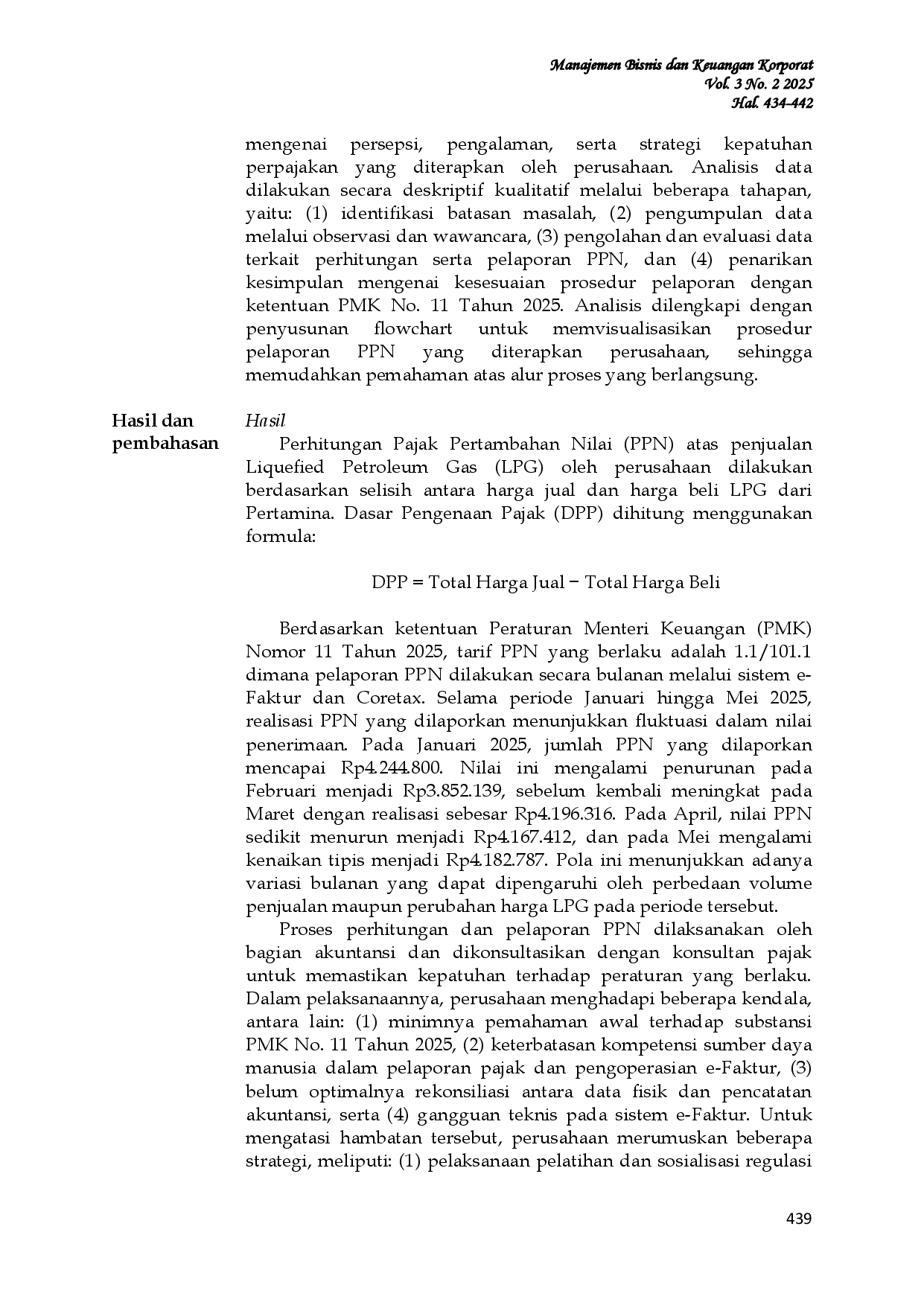
YWNRYWNR Penelitian ini juga mengkaji tantangan yang dihadapi perusahaan dan strategi yang diterapkan untuk memastikan kepatuhan pajak. Penelitian menggunakan metodePenelitian ini juga mengkaji tantangan yang dihadapi perusahaan dan strategi yang diterapkan untuk memastikan kepatuhan pajak. Penelitian menggunakan metode

STPI PAJAKSTPI PAJAK Keputusan penetapan harga jual pada UMKM Tenun Heybajo memperlihatkan bahwa tekhnik full costing memberikan gambaran biaya produksi lebih akurat dibandingKeputusan penetapan harga jual pada UMKM Tenun Heybajo memperlihatkan bahwa tekhnik full costing memberikan gambaran biaya produksi lebih akurat dibanding

KAHURIPANKAHURIPAN Sebagai rekomendasi, penelitian ini menyarankan integrasi aplikasi pencatatan digital yang dapat mempermudah proses administrasi, meningkatkan akurasiSebagai rekomendasi, penelitian ini menyarankan integrasi aplikasi pencatatan digital yang dapat mempermudah proses administrasi, meningkatkan akurasi

PIPI Pendekatan kualitatif deskriptif dengan studi kasus digunakan untuk menggali implementasi sistem, melalui wawancara mendalam, studi dokumentasi, dan analisisPendekatan kualitatif deskriptif dengan studi kasus digunakan untuk menggali implementasi sistem, melalui wawancara mendalam, studi dokumentasi, dan analisis

UNSULBARUNSULBAR Tujuan dalam penelitian ini adalah: untuk mengetahui penentuan harga pokok produksi sutera mandar pada Usaha Sarung Sutera Annisa Kecamatan Tinambung KabupatenTujuan dalam penelitian ini adalah: untuk mengetahui penentuan harga pokok produksi sutera mandar pada Usaha Sarung Sutera Annisa Kecamatan Tinambung Kabupaten
Useful /

FEKON UWGMFEKON UWGM Hal ini diartikan bahwa terdapat pengaruh secara simultan atau secara bersamaan electronic word of mouth, discount (X), dan emosi positif terhadap variabelHal ini diartikan bahwa terdapat pengaruh secara simultan atau secara bersamaan electronic word of mouth, discount (X), dan emosi positif terhadap variabel

YWNRYWNR Penelitian ini menggunakan metode kualitatif deskriptif dengan pendekatan studi kasus. Data dikumpulkan melalui wawancara dan dokumentasi, serta biayaPenelitian ini menggunakan metode kualitatif deskriptif dengan pendekatan studi kasus. Data dikumpulkan melalui wawancara dan dokumentasi, serta biaya
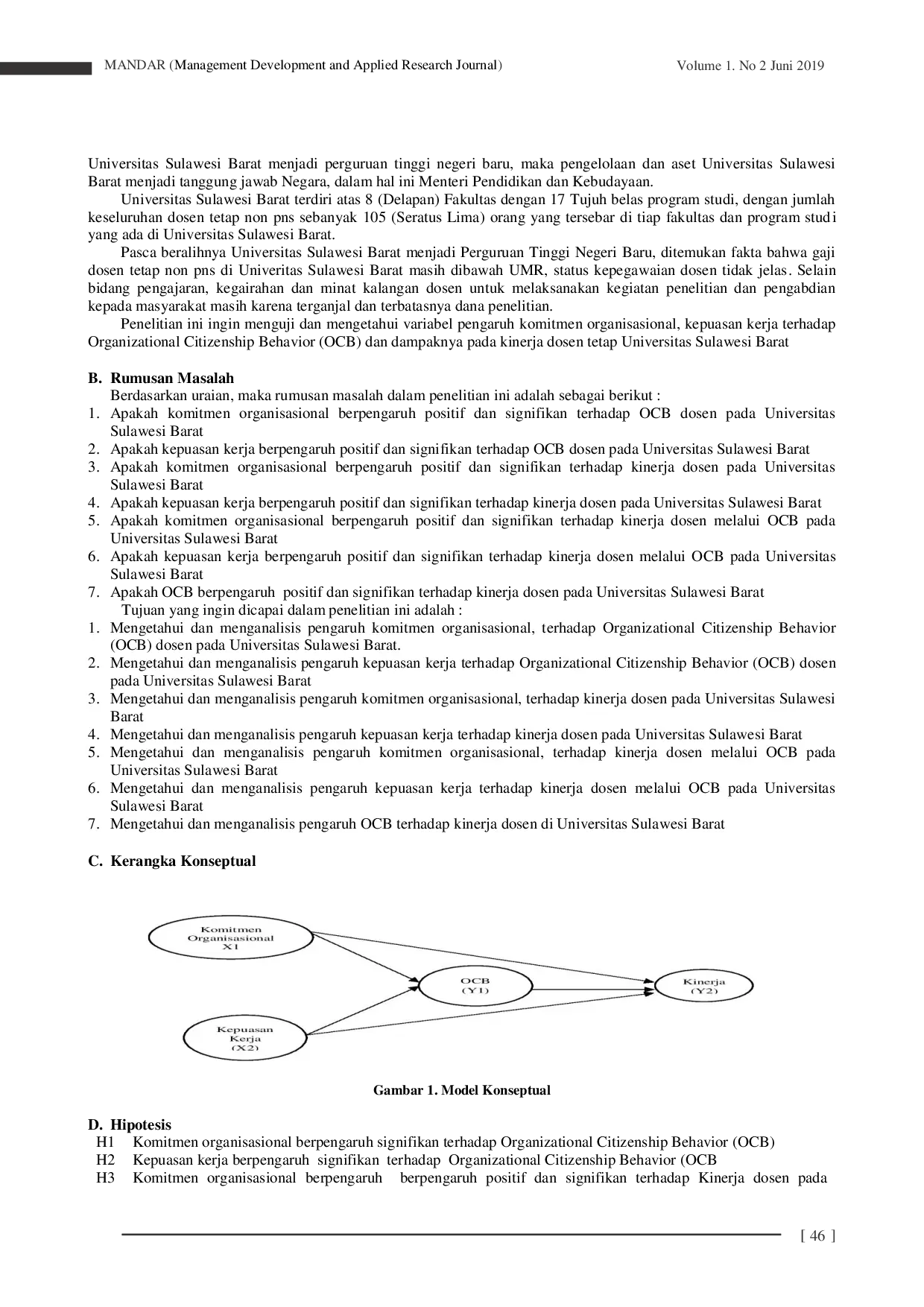
UNSULBARUNSULBAR Terdapat hubungan langsung yang signifikan antara OCB dan kinerja. Komitmen organisasional, kepuasan kerja, berpengaruh signifikan dan positif terhadapTerdapat hubungan langsung yang signifikan antara OCB dan kinerja. Komitmen organisasional, kepuasan kerja, berpengaruh signifikan dan positif terhadap

UNSULBARUNSULBAR Jenis penelitian yang digunakan adalah pendekatan kuantitatif. Hasil penelitian menunjukkan bahwa kepemimpinan situasional berpengaruh positif signifikanJenis penelitian yang digunakan adalah pendekatan kuantitatif. Hasil penelitian menunjukkan bahwa kepemimpinan situasional berpengaruh positif signifikan